Back to School with Honey: Simple & Delicious Ways to Fuel Busy School Days
September 24, 2026

Browning's Honey
Buy Raw Honey Online
May 7, 2026
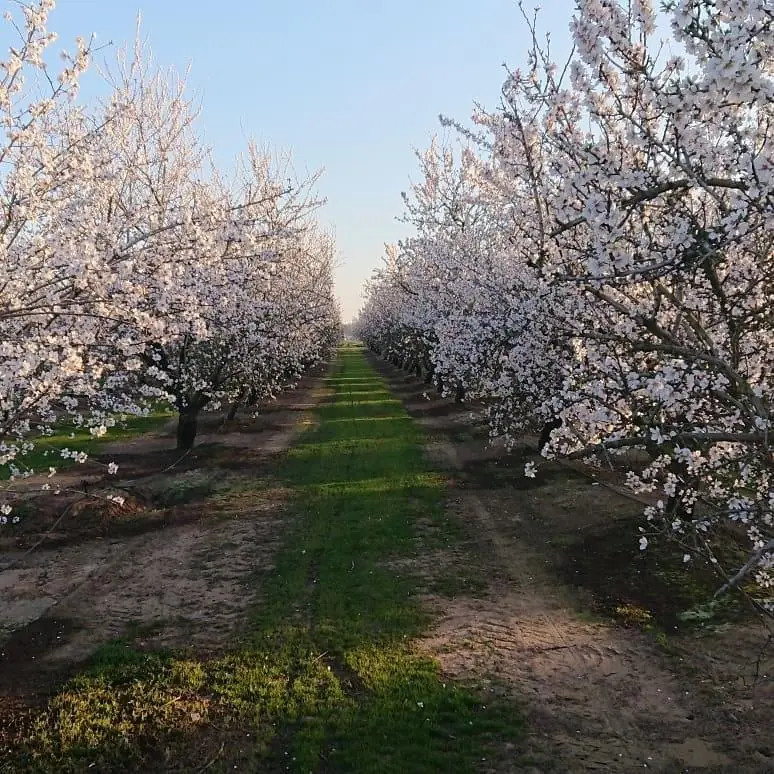
There’s a moment at the end of almond pollination season when you pull the last pallet and just… breathe.
The orchards are quieting down. The bloom is done. And it’s time to bring the honeybees home.
We’ve done this run enough times that it has its own rhythm — the early mornings, the smell of almond dust still on everything, the careful work of checking each hive before it gets loaded. You don’t rush this part. These bees just finished one of the hardest working stretches of their lives, and they deserve to be handled right.
Most people don’t fully grasp the scale of what happens in California during almond pollination every February. Over 2 million honeybee colonies — that’s 70–80% of all managed honeybees in the United States — come together in almond orchards across the state. More than 1.3 million acres. Every acre needs two colonies to set a crop. Without honeybees, there is no almond harvest. Full stop.
According to the USDA, the industry generates over $11 billion annually for U.S. agriculture. We’re not out here just producing honey. We’re helping feed the country. That’s something I think about every time we make this trip.
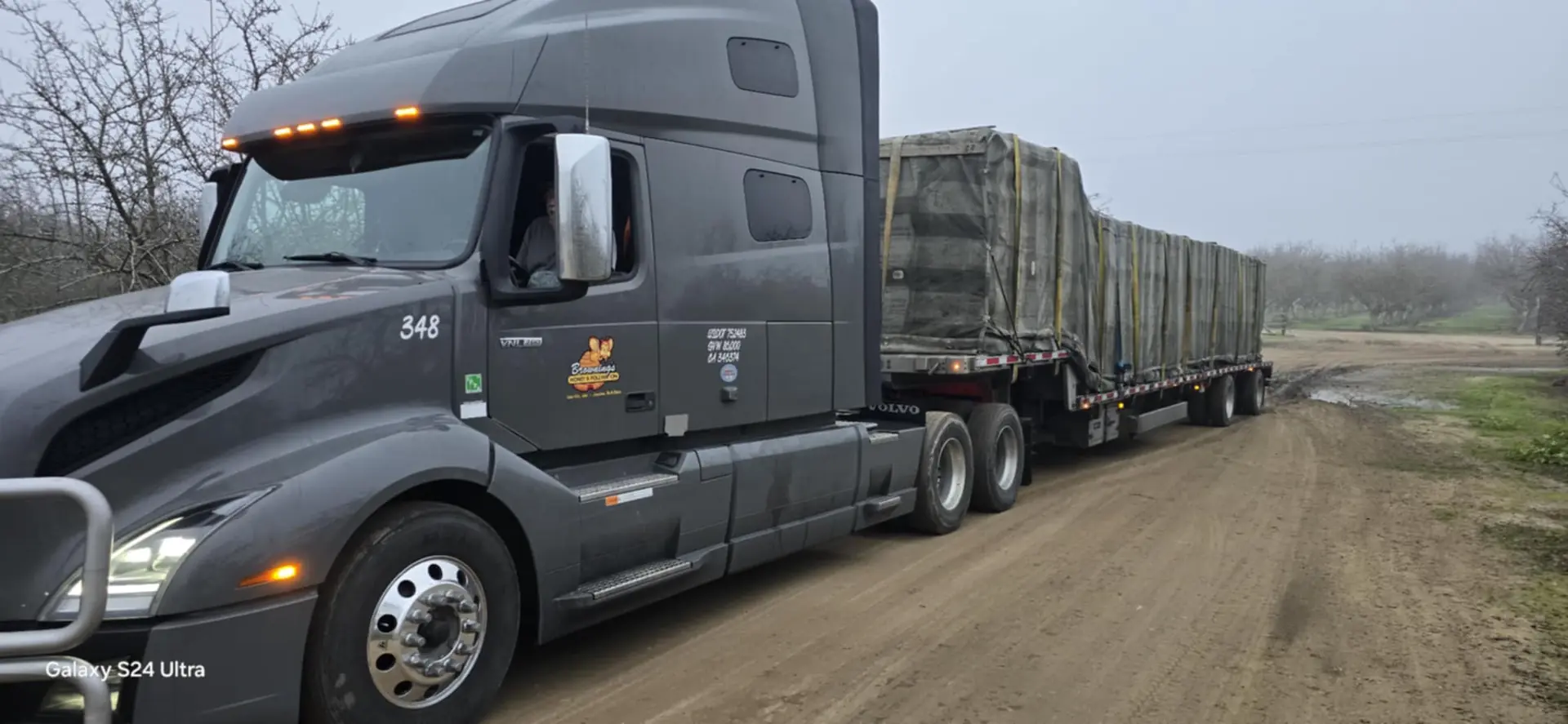
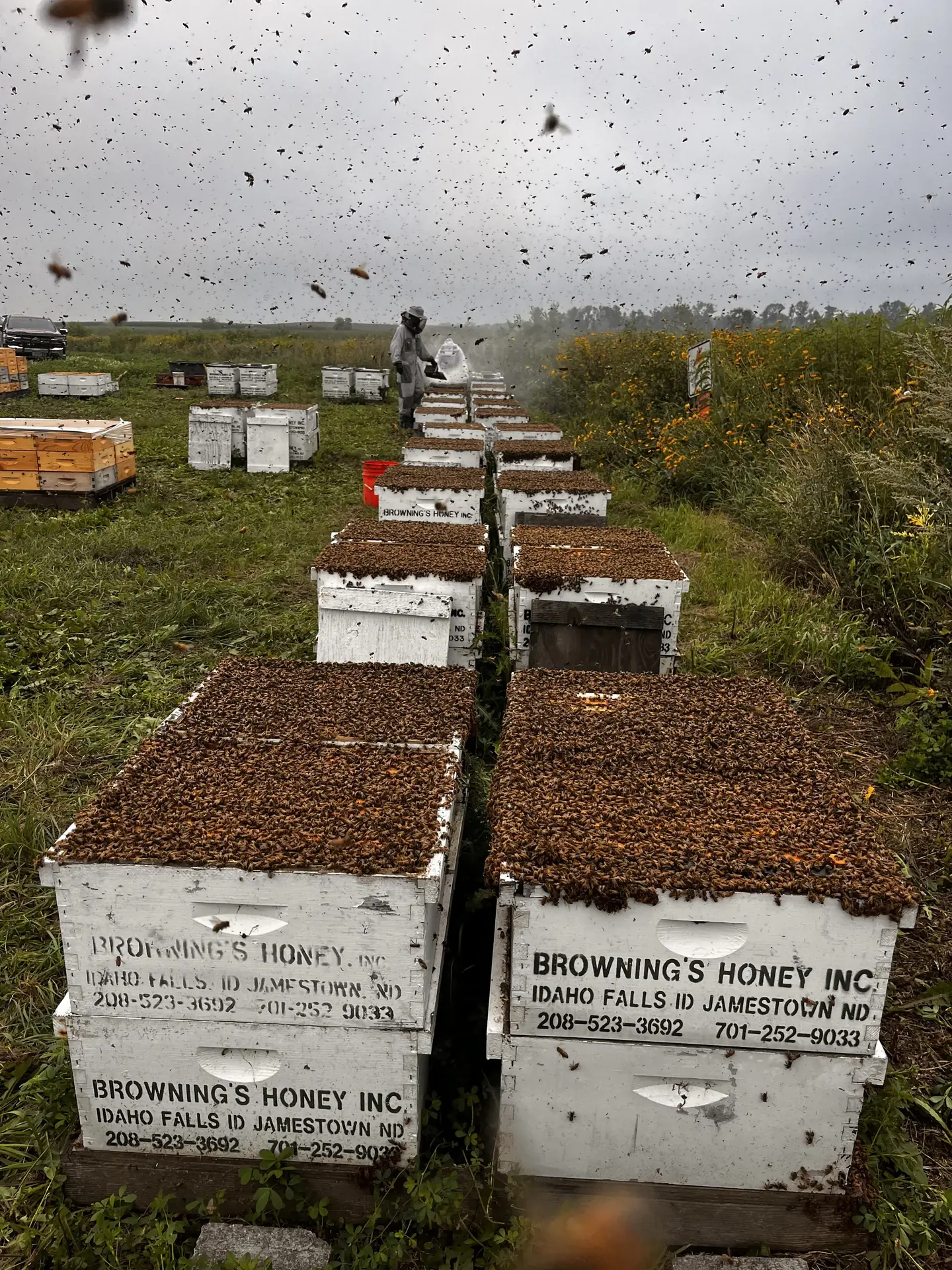
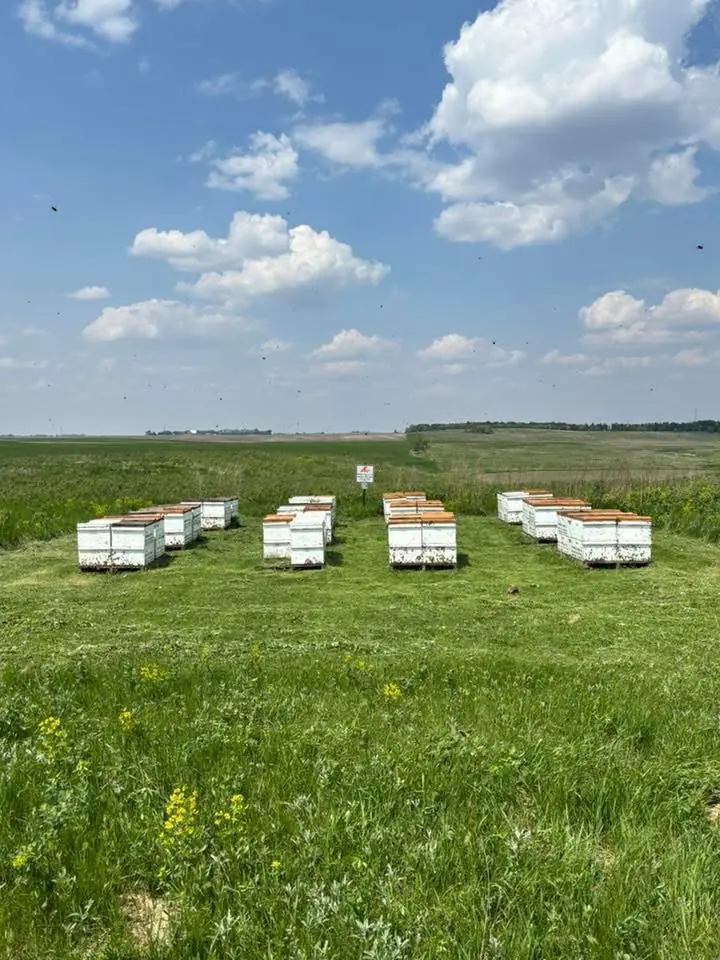
Getting thousands of hives from California after almond pollination back to Idaho and North Dakota isn’t a small operation. Timing matters — you want to move at night when the bees are calm and clustered. Weather matters. Every strap, every screen, every load has to be right.
Most loads roll out after dark. The honeybees have settled in for the night, clustered and calm, and that’s when you want them on a truck — not in the middle of a warm afternoon when half the foragers are still out in the field and the hive is buzzing with activity. You do a final walk of the yard, headlamp on, checking screens, checking straps, making sure everything is secure before the driver pulls out.
By the time we’re done, we’ve moved thousands of hives across hundreds of miles. It takes days. The crew is tired. But there’s something I always look forward to on this drive — somewhere along the way, the landscape shifts. The valley gives way to high desert, then to the wide-open plains. The air changes. And you know the bees are headed somewhere they can just… settle in and do their thing.
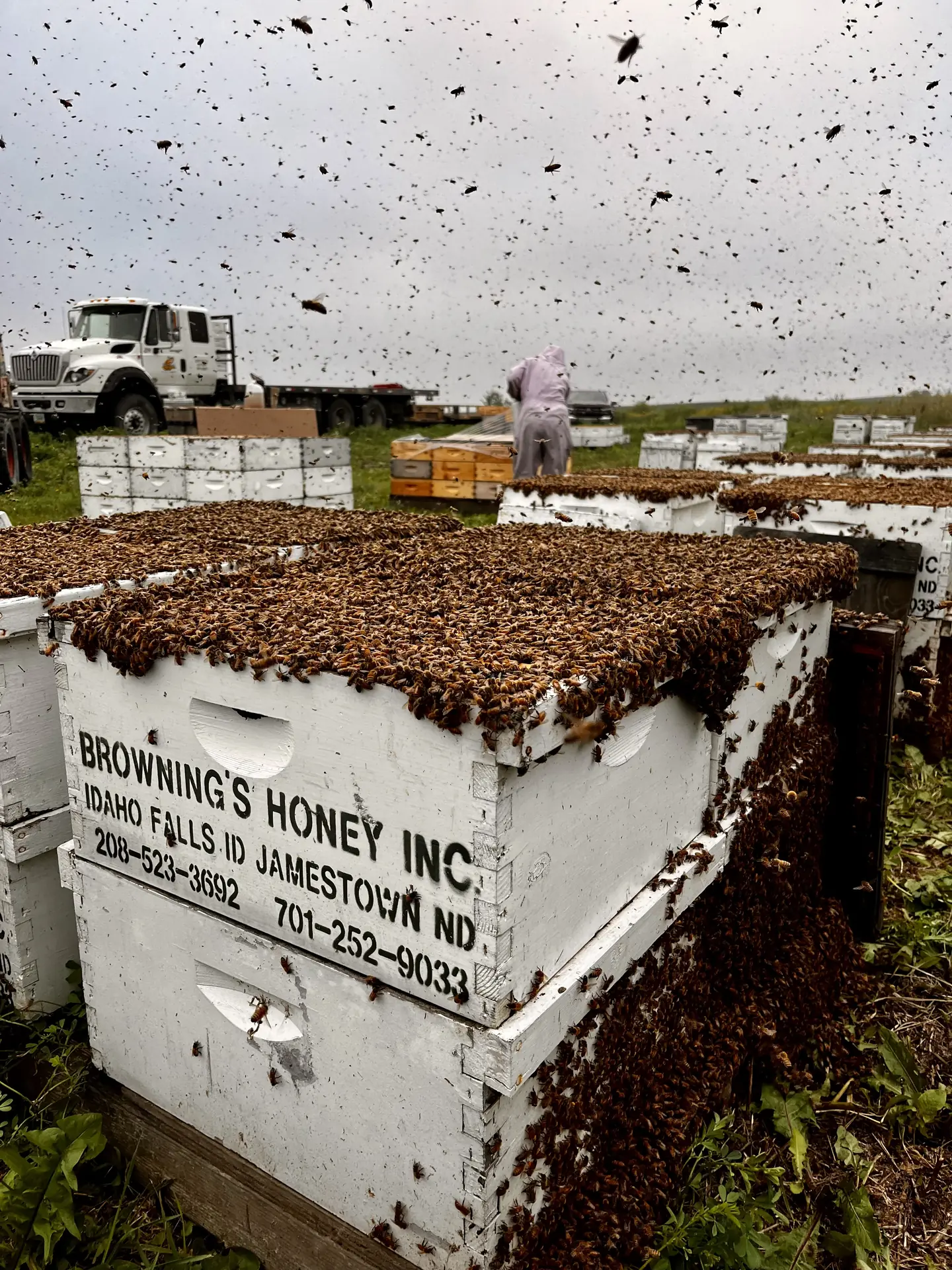
Once they’re home, our job shifts from transporter to observer. This is spring build-up season, and for a beekeeper, it’s one of the most telling times of the year.
We’re not just looking at the outside of the hive. We’re reading it.
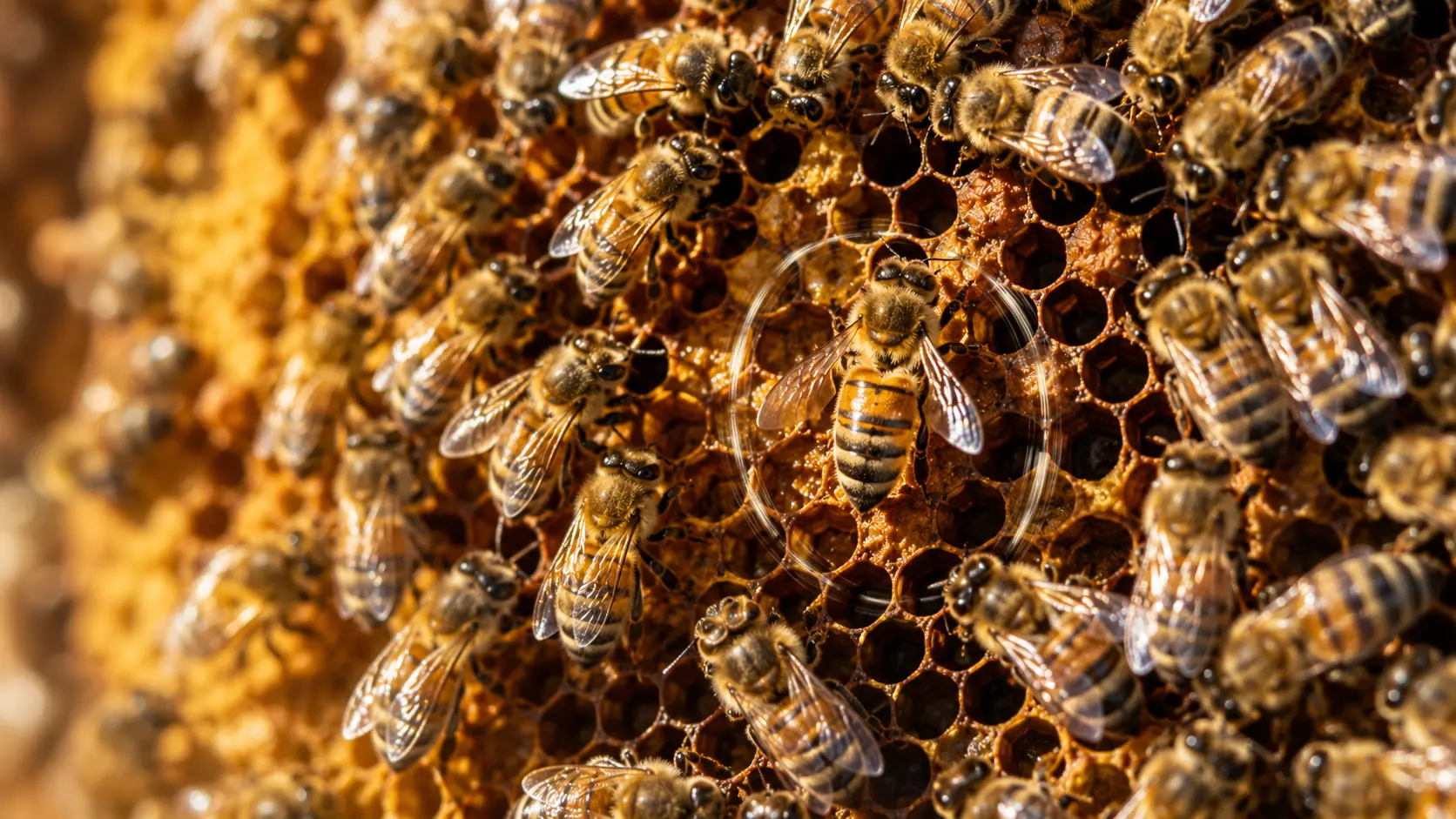
When we pull a frame right now, we’re looking for a queen that’s shifted into a higher gear — her laying pattern tightening up, brood filling comb wall to wall in that solid, confident pattern that tells you she’s healthy and the colony trusts her. A spotty pattern? That’s a conversation we need to have with that hive sooner rather than later.
I’m watching the entrance too. Young bees taking their first orientation flights look different than foragers heading out on a mission — they hover and spin in slow arcs, facing the hive, burning the location into memory. It sounds like nothing, but when you see a lot of that activity, you know the population is growing and the next generation is coming online.
We’re checking stores. Coming out of pollination, some colonies burn through more than you’d expect. A hive that’s light on honey right now, before the first real nectar flows hit, needs attention.
And we’re thinking about splits — which colonies are strong enough to divide, where we’ll put them, how to set them up for success. The decisions we make in these next few weeks ripple out all the way to August.
Spring build-up isn’t a single moment. It’s a slow momentum that either builds or it doesn’t, and our job is to make sure nothing gets in its way.
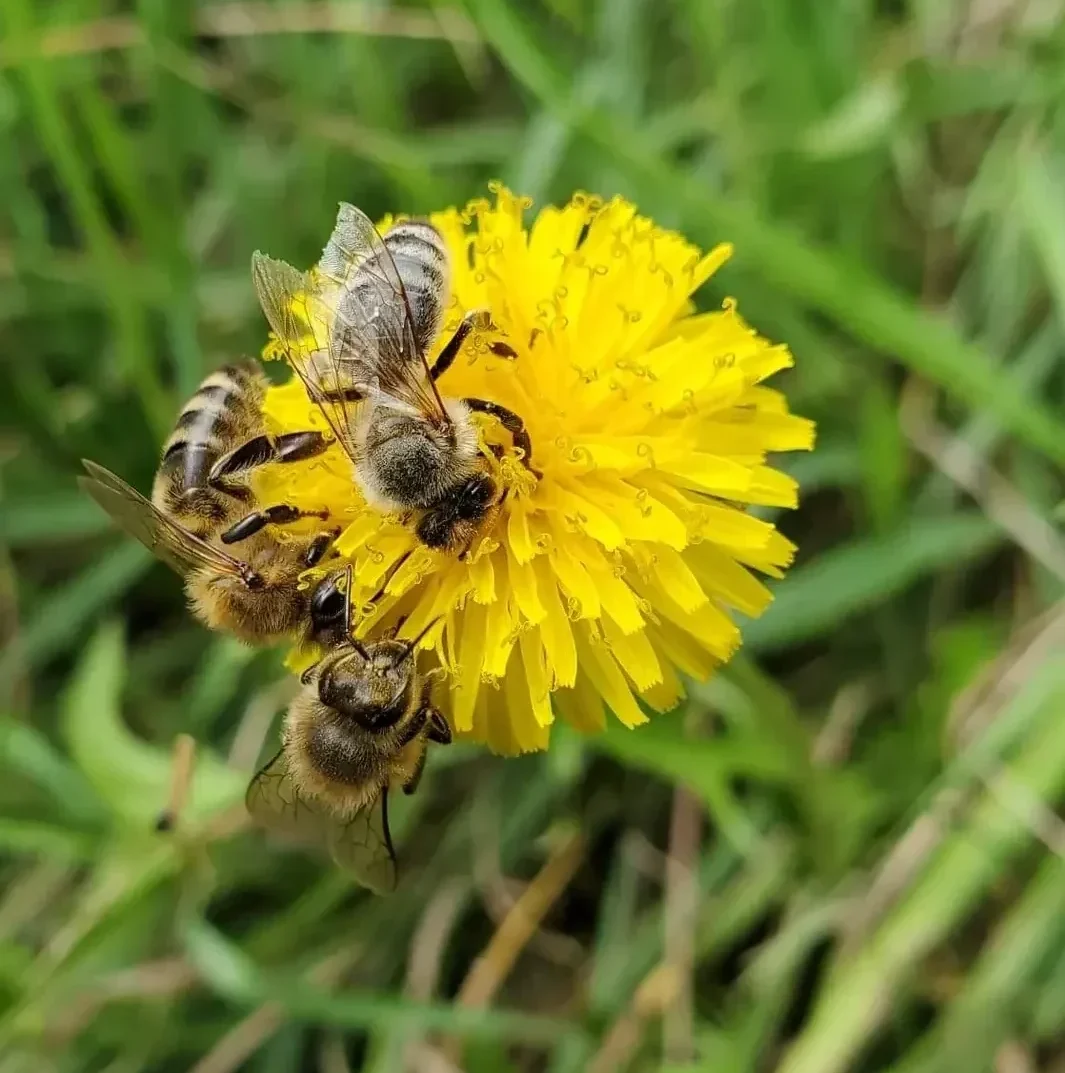
There’s a stretch in late spring — usually somewhere in May, when the dandelions are going strong and the fruit trees have just finished blooming — where you open a hive and everything just feels right. The bees are calm. The brood pattern is wall to wall. There’s fresh nectar glistening in the upper frames and the whole box smells like something good is coming.
That moment is what all of this is working toward.
After the long haul of almond season, after the miles and the late nights and the early mornings, there’s something deeply satisfying about watching a colony hit its stride in spring. These are healthy, well-traveled bees that just helped feed the country — and now they’re home, doing what they do best.
That’s the part of this job that never gets old.
That’s also what makes Browning’s Honey different — These are our colonies, managed by our crew, from California orchards to Idaho and North Dakota fields. Our extracting facility. Our bottling process. Every jar is fully traceable back to the hive it came from.
When you buy a jar from us, you’re getting something that was handled with intention at every single step.
Right now, we’re bringing the bees home and setting the table for a great season.
We hope you’ll be part of it.
👉 At Browning’s Honey, we manage every step of the process – from the hive to the jar. You can browse our honey collection and taste the difference for yourself.
September 24, 2026
August 20, 2026
July 23, 2026
July 16, 2026