Back to School with Honey: Simple & Delicious Ways to Fuel Busy School Days
September 24, 2026
Browning's Honey
Buy Raw Honey Online
April 30, 2026
Spring has a way of changing the pace of everything. The days stretch a little longer, green starts pushing up through the ground, and there’s a kind of quiet urgency in the air — like the world is gearing up for something. If you keep bees, or you’re simply paying attention to the natural world around you, May is one of the most important months of the year.
This post covers a lot of ground, and that’s intentional. We want to pull back the curtain on what’s actually happening inside the hive right now, talk about something small you can do in your own yard to support pollinators, and share a few ideas for meaningful local gifts heading into Mother’s Day and Teacher Appreciation Week.
It all connects. That’s the part we love most.
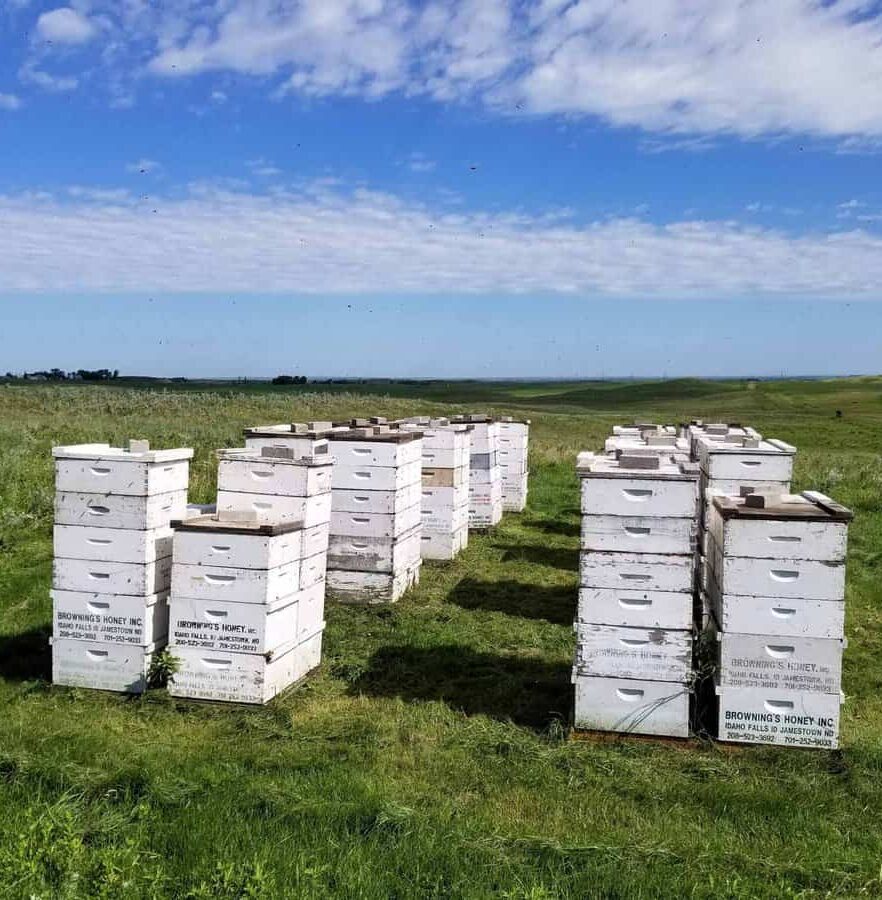
If you’ve ever wondered how beekeepers spend their spring, the short answer is: watching, adjusting, and staying one step ahead.
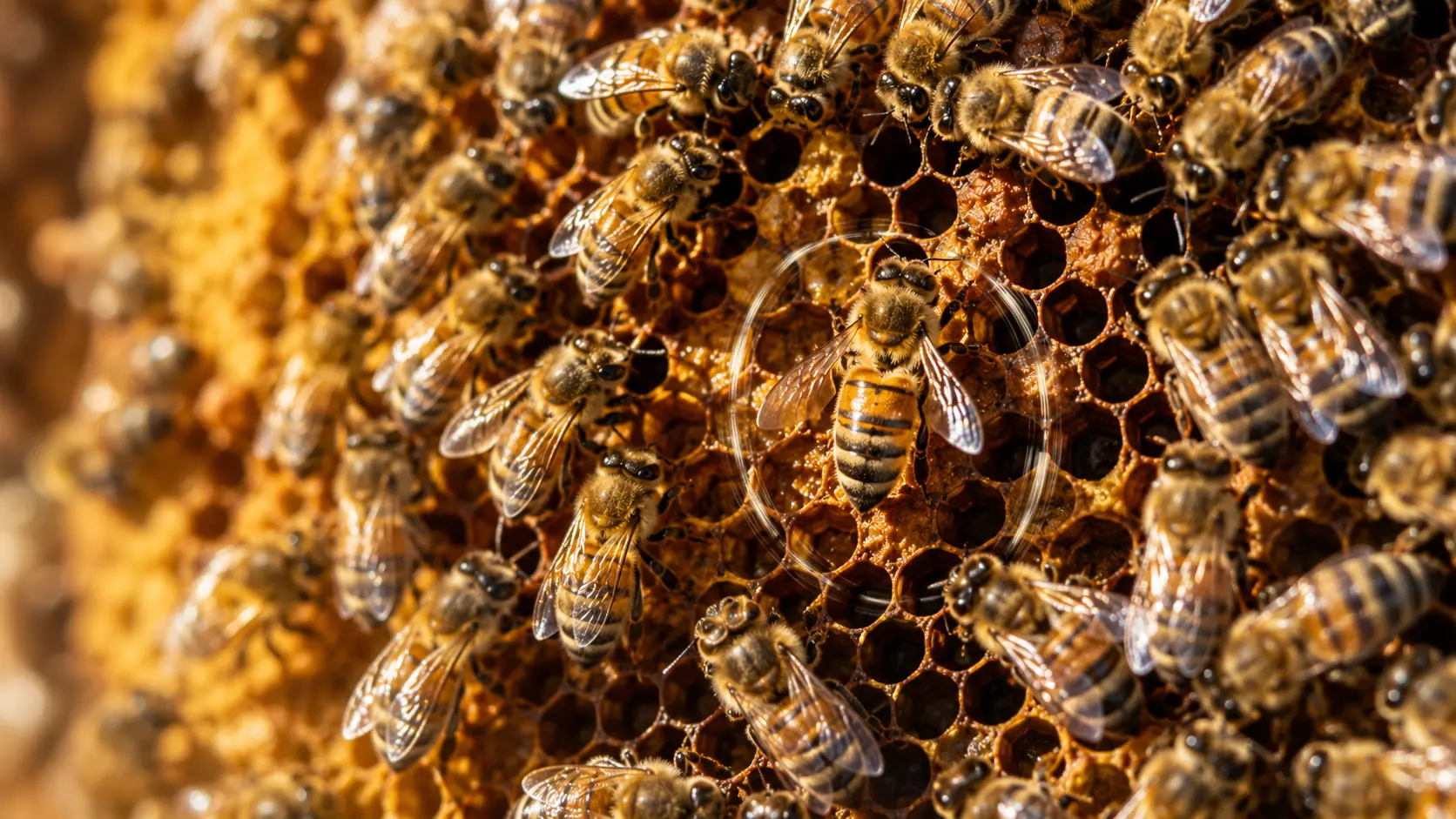
Spring build-up is the period when a honey bee colony transitions from its smaller, tightly clustered winter state into full, active production mode. It is, without question, one of the most critical windows of the entire beekeeping year. What happens during these few weeks in April and May has a direct impact on honey yields come summer and fall.
Here is what is happening inside the hive right now.
The queen is working at her peak capacity. During strong spring conditions, a healthy queen can lay between 1,500 and 2,000 eggs per day. That is not a typo. The hive is essentially building itself from the inside out, and every decision we make as beekeepers during this period either supports that growth or gets in the way of it. This is why spring beekeeping is so important.
Worker bees are operating around the clock in carefully defined roles. Foragers are leaving at first light and returning loaded with pollen — you can actually watch them come back with full pollen baskets if you sit near a hive entrance for a few minutes. Nurse bees are tending to the developing brood, feeding larvae and maintaining the precise temperature needed for healthy development. Other workers are drawing out fresh wax comb to create space for the expanding population and incoming nectar stores. Meanwhile, guard bees hold the entrance, protecting everything that is being built. It is organized, purposeful, and genuinely impressive.
As beekeepers, this time of year means frequent hive checks. Spring beekeeping is definitely a full-time job! We are looking at colony strength, food stores, queen activity, and the overall balance of the hive. When a strong colony starts running out of space, they can swarm — splitting the colony in two and potentially leaving with half the bees. Managing that instinct, through careful splitting and space management, is part of the job.
The reason all of this matters to you, even if you are not a beekeeper, is simple: the honey you buy in late summer or fall is built on the foundation laid right now. A healthy, well-managed hive in May is what makes a productive honey flow in July and August possible. Every jar on our shelves traces back to these weeks.
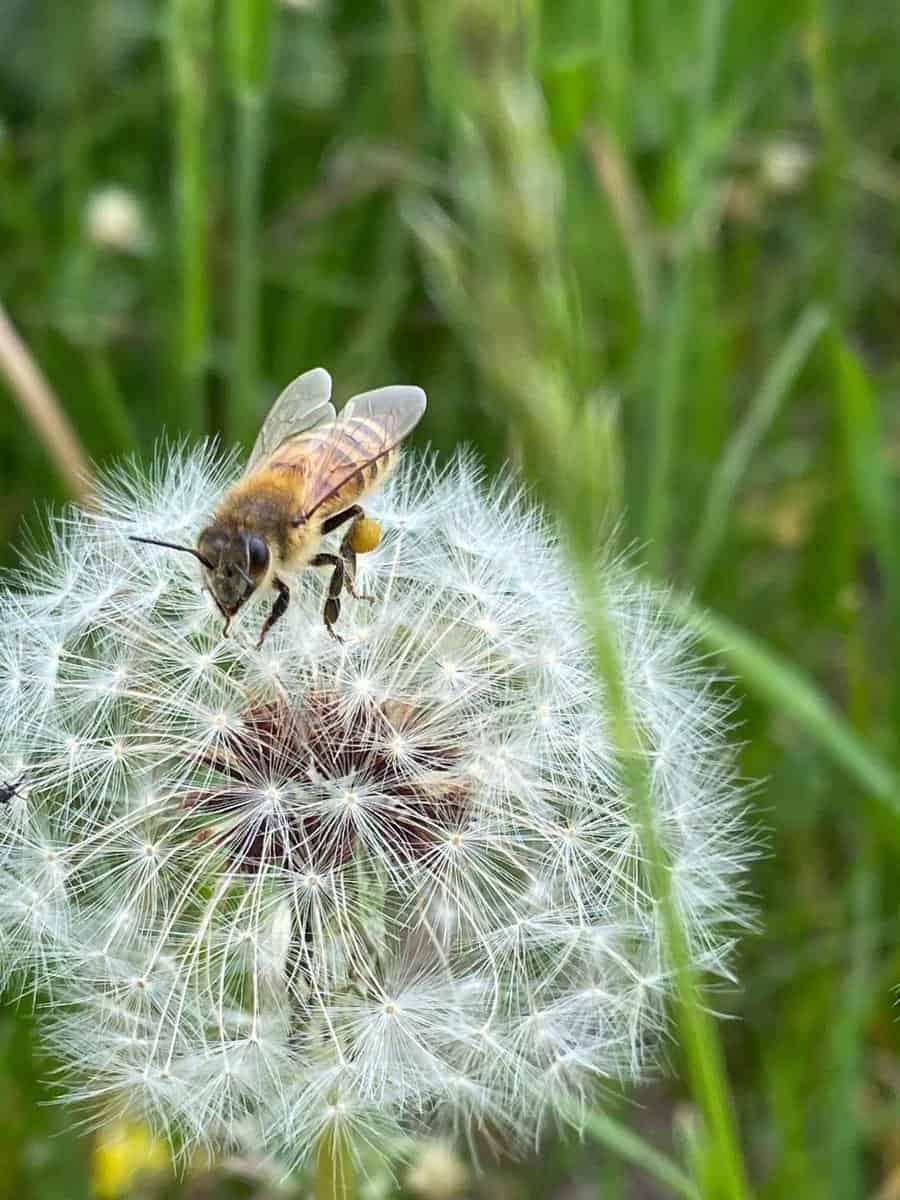
We understand the instinct to keep a tidy lawn. But it is worth reconsidering what dandelions actually are, versus how they are often treated
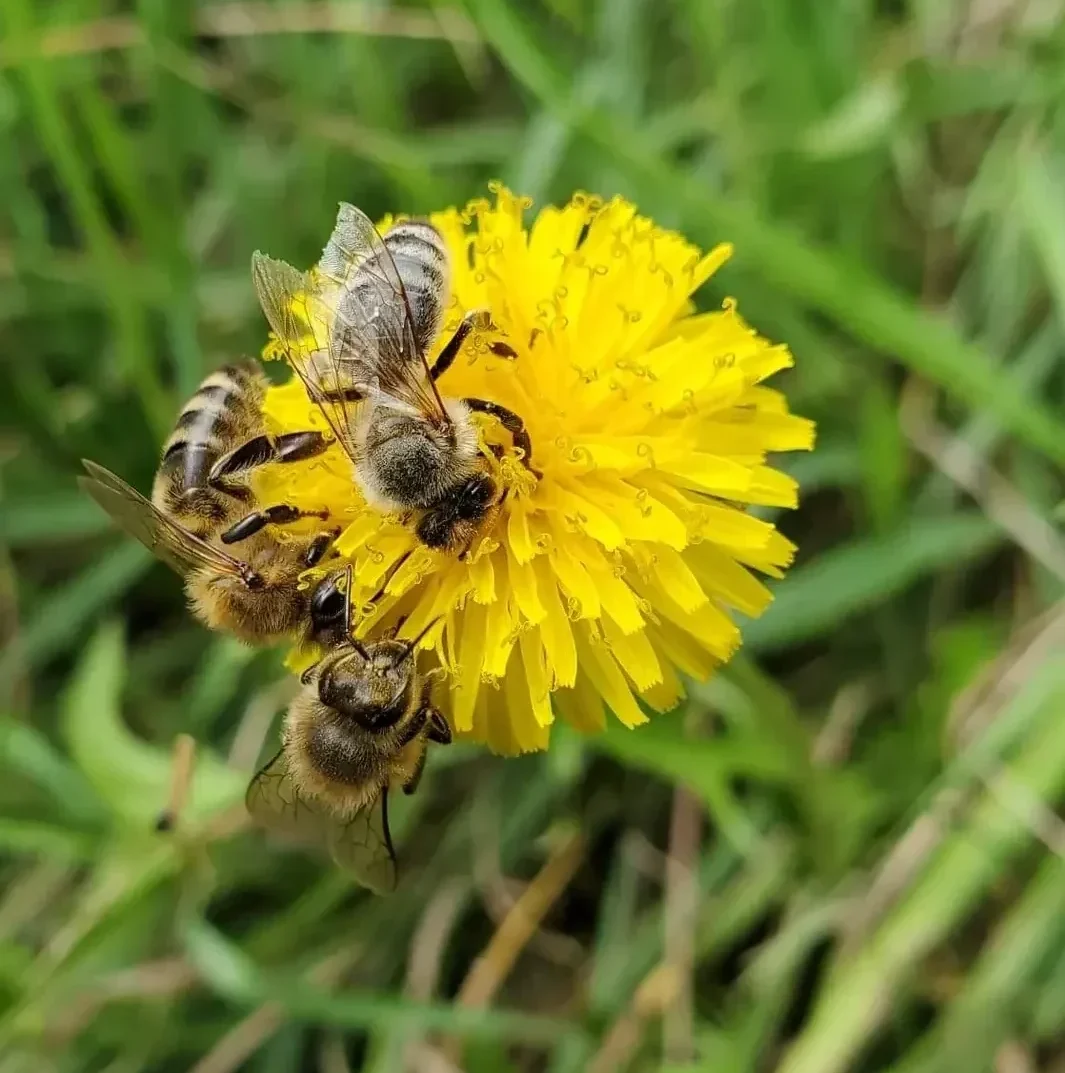
Spring beekeeping is important, but there are things that you can do to help too! There is a growing movement called No Mow May, and if you have not heard of it yet, the idea is straightforward. By delaying or reducing lawn mowing through the month of May, homeowners create space for early-blooming plants — especially dandelions — to provide food for bees and other pollinators at a time when that food is genuinely hard to come by.
Dandelions are one of the first reliable sources of both nectar and pollen available to bees each spring. They bloom early, they bloom prolifically, and they grow almost everywhere. For a colony that is actively building up its population — needing more and more food to fuel rapid growth — a lawn full of dandelions is not a nuisance. It is a resource.
The timing matters too. Early spring can be what beekeepers call a “dearth” period, when colony populations are climbing but natural forage has not fully caught up yet. Colonies can actually lose weight during this window if they do not have access to enough food. Dandelions help bridge that gap.
While we are doing our part with our spring beekeeping, participating in No Mow May does not require letting your entire yard go wild. Letting a section grow, skipping one or two mowing cycles, or simply holding off until late May rather than starting in early April — all of it helps. Small choices compound when enough people make them.
Beyond honeybees, native pollinators like bumblebees, mason bees, and various solitary bee species depend on these same early food sources. Many native bees do not live in managed hives. They have no beekeeper looking after their stores. What blooms in your yard may be all they have access to.
No Mow May connects the private choices we make in our own spaces to a much larger ecological picture. That connection is exactly the kind of thing we try to keep in front of people, because it matters.
Mother’s Day gift shopping often ends up in familiar territory. Flowers, candles, a spa set pulled from a shelf. There is nothing wrong with any of those things, but there is a reason people are starting to look for something with a little more intention behind it.
Local honey fits that space well, and not in a gimmicky way.
Honey is genuinely useful. It does not sit in a closet. It finds its way into morning tea, onto toast, into salad dressings and marinades, into baking. People use it. And when a gift gets used, it keeps delivering — every time someone reaches for that jar, there is a small moment of connection back to the person who gave it.
Raw local honey also carries a specificity that mass-produced honey cannot replicate. The flavor profile reflects what was blooming locally when the bees were foraging. It is, in a real sense, a product of this place and this season. That makes it feel personal in a way that is hard to manufacture.
Here are a few gift ideas we have been putting together for customers this season:
Honey and Skincare Bundles. Honey has been used in skincare for a long time, and for good reason. Raw honey is known for its moisture-retaining properties and is a common ingredient in simpler, more natural skincare routines. Pairing a jar of raw honey with locally made soaps, beeswax lip balm, or a gentle lotion creates a cohesive gift that feels thoughtful rather than assembled.
Tea and Honey Pairings. This is a classic for a reason. A quality jar of honey paired with a good loose-leaf or bagged tea makes for a gift that invites someone to slow down. That sounds small, but for a lot of moms, a reason to sit quietly for ten minutes with something warm is genuinely valuable.
Infused and Creamed Honey Samplers. If you want something a little more playful, a sampler of different honey varieties gives someone new flavors to explore. Creamed honey, infused honey, varietal honeys — each one tastes different, and the experience of working through a sampler is a small, ongoing pleasure.
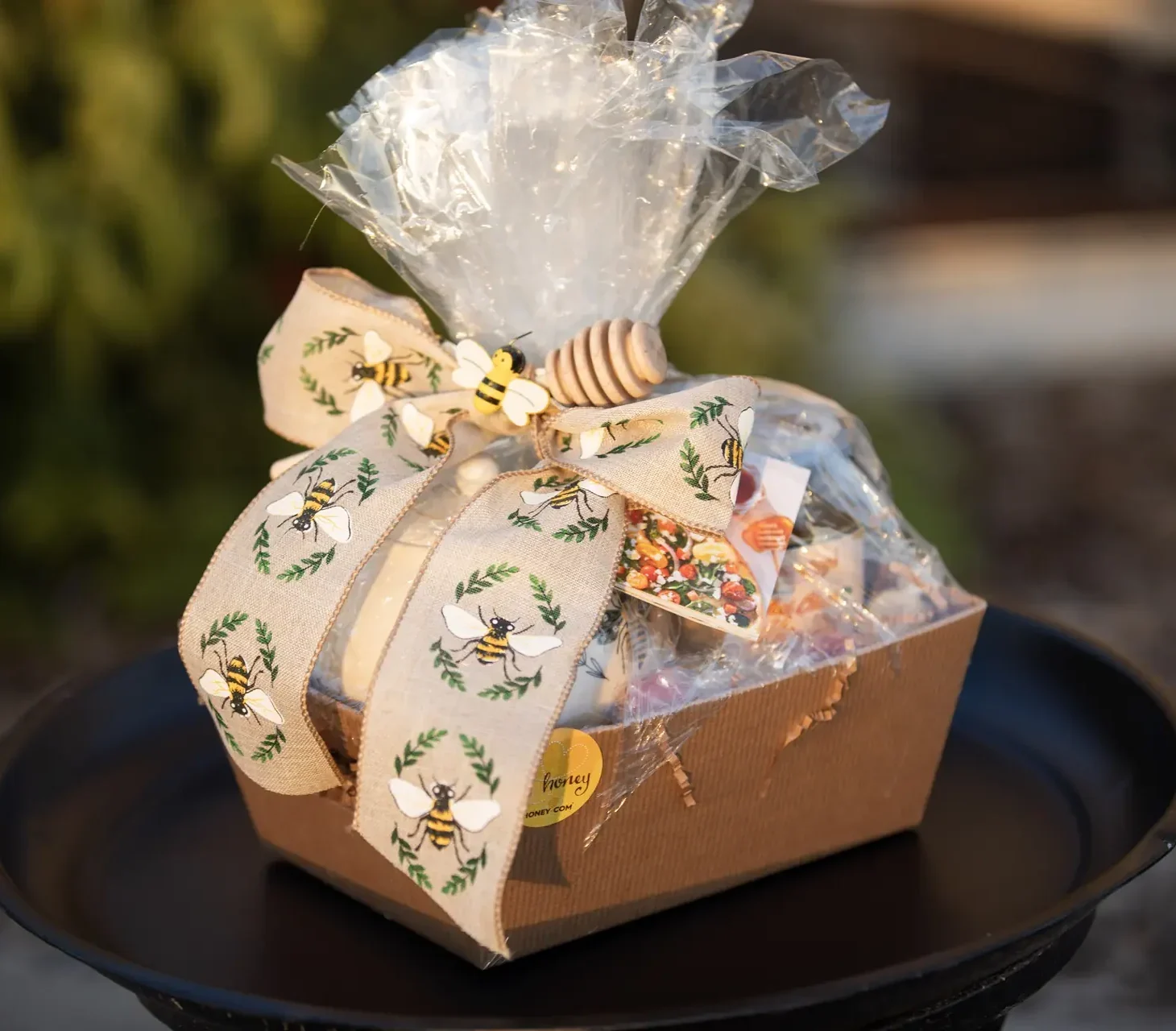
Custom Local Gift Baskets. This is where a gift really comes together. Combining local honey with other regional products — jams, baked goods, handmade goods from local makers — creates something that could not have been assembled from a website catalog. It is curated, local, and completely specific to this place.
The common thread in all of these is that they get used. That is what we keep hearing from customers: they want to give something that does not just look nice in the moment and then gather dust.
Teacher Appreciation Week tends to arrive faster than most people expect. If you are trying to figure out something thoughtful without a lot of lead time, honey-based gifts are a genuinely practical option.
Teachers receive a lot of mugs and gift cards. A small jar of local honey with a simple handwritten tag feels different — more personal, more considered. Something along the lines of “Thanks for helping us grow” works well and pairs naturally with honey, given what bees are doing right now.
Honey and tea bundles work particularly well here because they are practical. Teachers can use them. Honey sticks are another good option — easy to tuck into a small gift bag, zero mess, and something most people enjoy.
These gifts also scale easily. If you are putting together something for an entire school staff, bus drivers, coaches, and classroom aides, small jars or honey sticks are affordable enough to cover everyone without making it feel like a bulk order. We can help you put together quantities and packaging if that is useful.
One of the things we come back to every spring is how interconnected all of this actually is.
The choices bees make right now — which flowers to visit, how efficiently the colony builds — shape the honey we will harvest later in the year. Spring beekeeping is a vital part of this. But more important are the choices you make in your yard — whether to mow, what to plant, how much open ground you leave for wildflowers — affect the resources available to pollinators that work throughout your whole region. The choice to buy local honey, give it as a gift, or share it with someone you want to say thank you to, feeds back into the ability of small apiaries like ours to keep doing this work.
None of it is complicated. That is kind of the point.
Letting dandelions grow a little longer. Choosing a jar of local honey over something imported from the other side of the world. Taking a few extra minutes to put together a gift that means something. These are small things. But small things, done consistently and by enough people, add up to something real.
We are heading into what is always the most exciting stretch of the beekeeping year, the spring beekeeping season. The hives are building, the fields are waking up, and the season ahead looks promising. We are glad you are part of it.
Stop by the shop if you want to talk honey, gift ideas, or anything else. We are always happy to help you find something that fits.
As a fifth-generation beekeeping family, we believe that great honey begins with healthy bees—and that starts with strong queens.
Queen grafting is just one of the many ways we care for our hives, protect their future, and continue a tradition that began in 1921.
Next time you enjoy a spoonful of honey, remember—behind that sweetness is a thriving hive, a hardworking colony, and a carefully raised queen leading the way.
Bring a friend, browse a little, and find something sweet 🍯
September 24, 2026
August 20, 2026
July 23, 2026
July 16, 2026