World Honey Bee Day: Celebrating the Bees, Beekeepers & a Tradition Worth Protecting
August 20, 2026

Browning's Honey
Buy Raw Honey Online
May 14, 2026
Spring is one of the most exciting—and busiest—times in the bee yard. After months of winter survival, hives are building up quickly, populations are booming, and everything is working toward one goal: growth.
And with that growth comes something that often surprises people…
Swarms.
At Browning’s Honey, we get questions about swarms every single spring. So this week, we’re breaking it down for you:
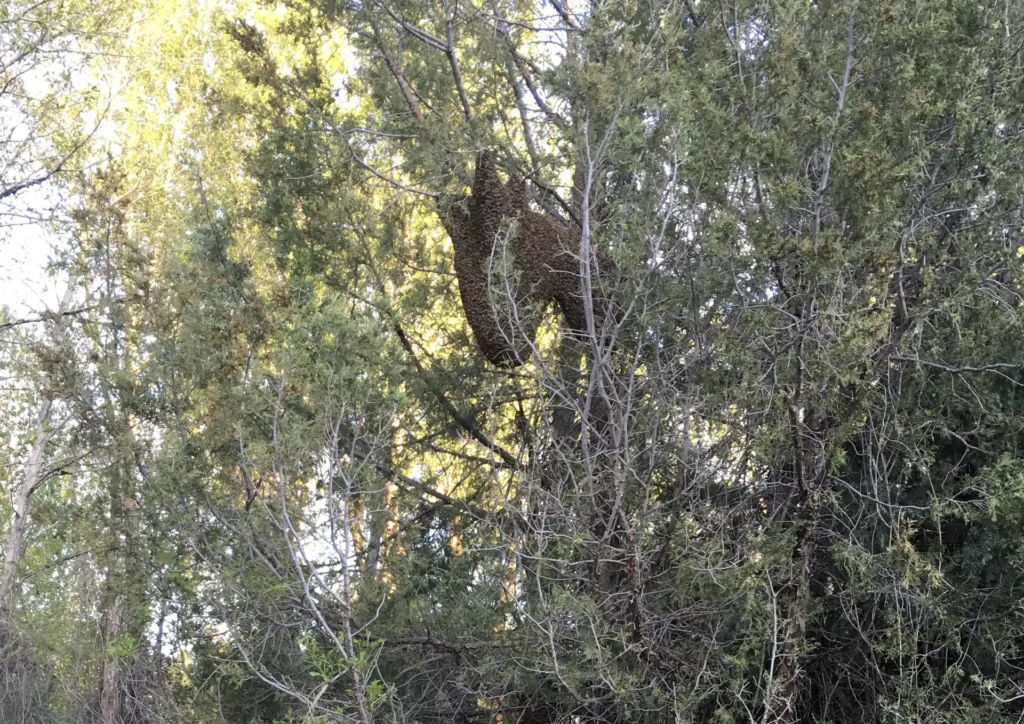
Every spring, our phones start ringing with the same question: “There’s a huge cluster of bees in my yard — should I be worried?”
The short answer? No. But we get it — walking outside to find thousands of bees hanging from your apple tree is not exactly what you planned for your Saturday morning.
Here’s what’s actually going on, and what to do about it. Space runs out. The queen runs out of room to lay. Bees start spilling out the entrance just to have somewhere to stand. And when that happens, the hive makes a decision that’s been hardwired into honeybees for millions of years.
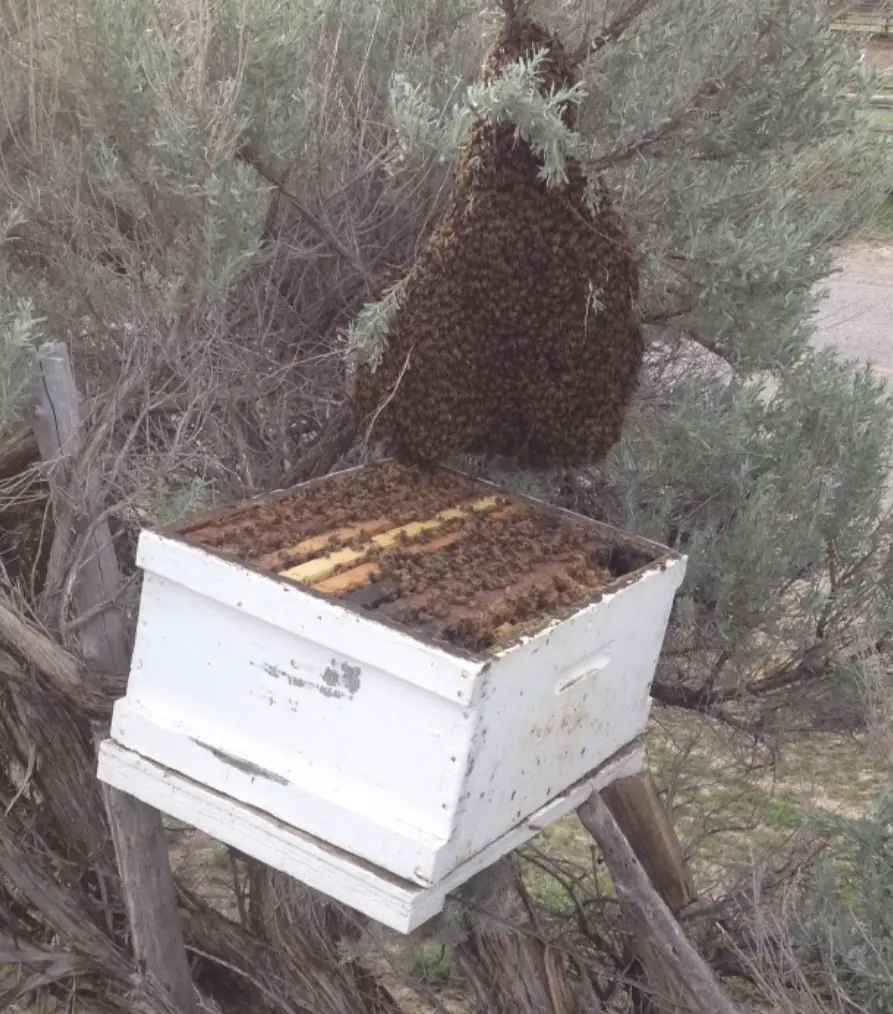
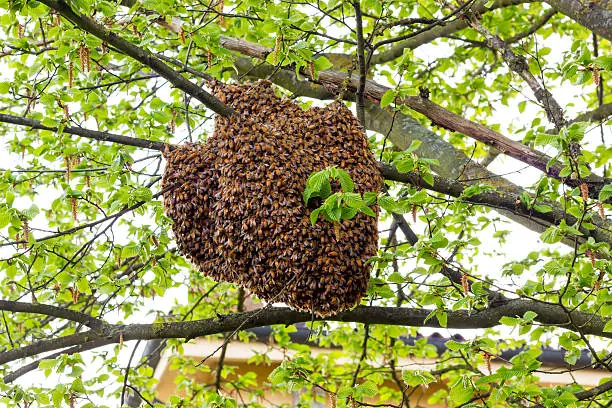
What is a bee swarm? A bee swarm is how a honeybee colony has babies — not as individual bees, but as an entire community.
When a hive gets strong enough, the original queen takes roughly half the worker bees and leaves to find a new home. The bees left behind raise a new queen and keep the original colony going. One hive becomes two. It’s messy, loud, and kind of incredible.
Far from being a sign something’s wrong, a swarm usually means a hive is doing really well.
Three things tend to push a colony toward swarming:
The hive runs out of room. Spring nectar flows in, the queen ramps up egg-laying, and suddenly there’s not enough space. Think of a growing family that’s outgrown their house — except instead of calling a realtor, they just… leave.
Conditions are perfect. When dandelions, fruit trees, and wildflowers are all blooming at once, bees get the signal that now is the time to expand. Food is everywhere. Why not start a second colony?
The queen is aging. As queens get older, the pheromones that keep the colony unified start to fade. Sometimes the bees decide it’s time for a change — and swarming is part of that process.
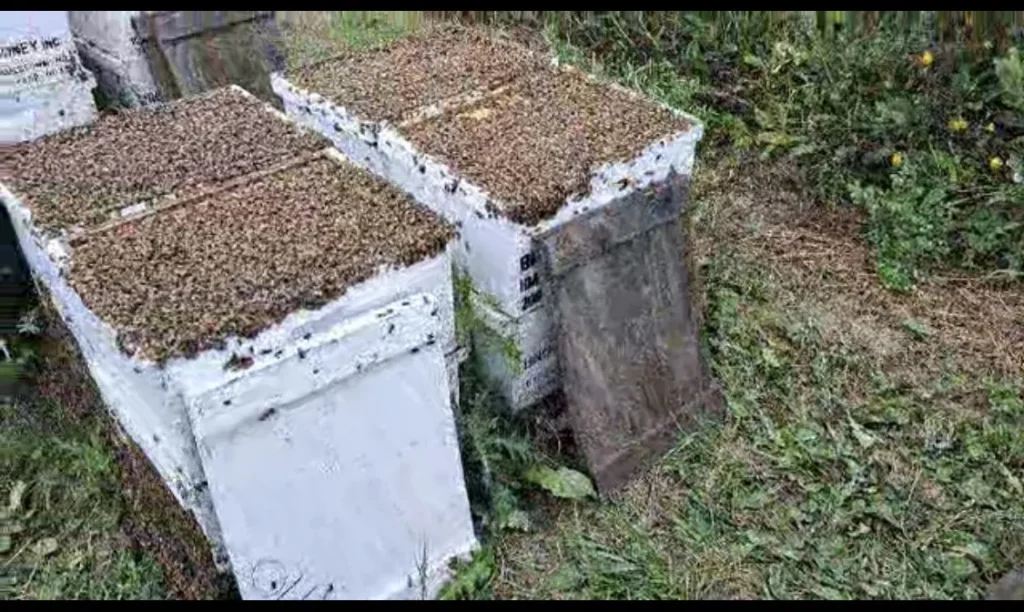
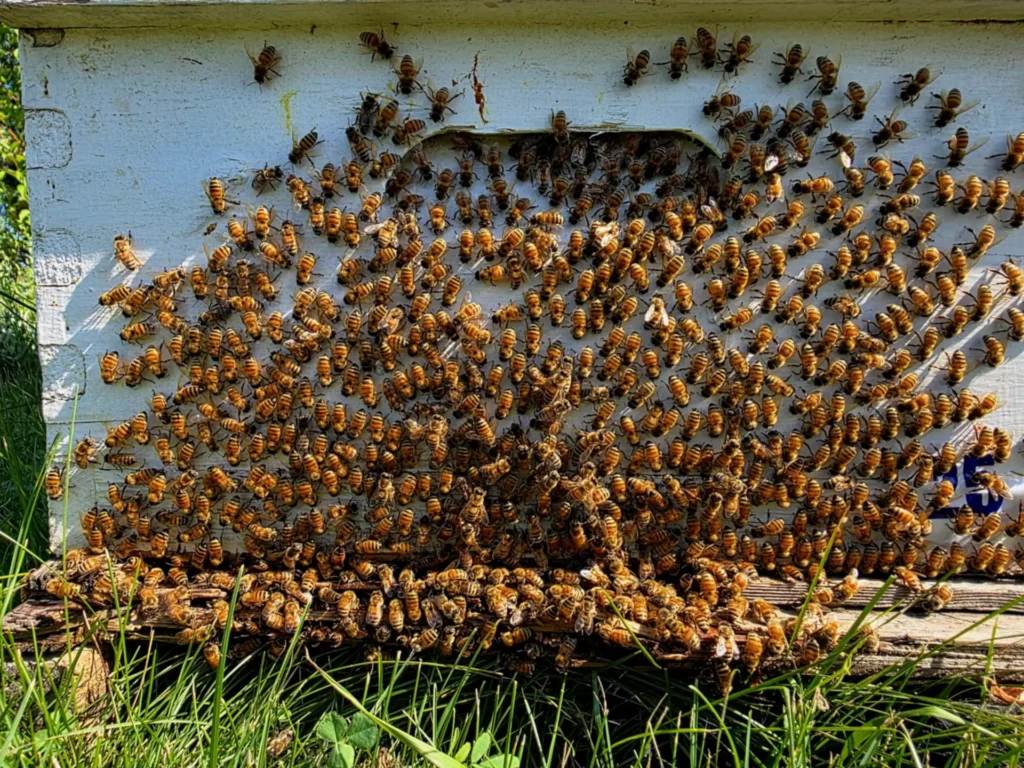
If you keep bees, catching swarm signs early gives you a chance to manage things before half your colony flies off into the neighbor’s oak tree.
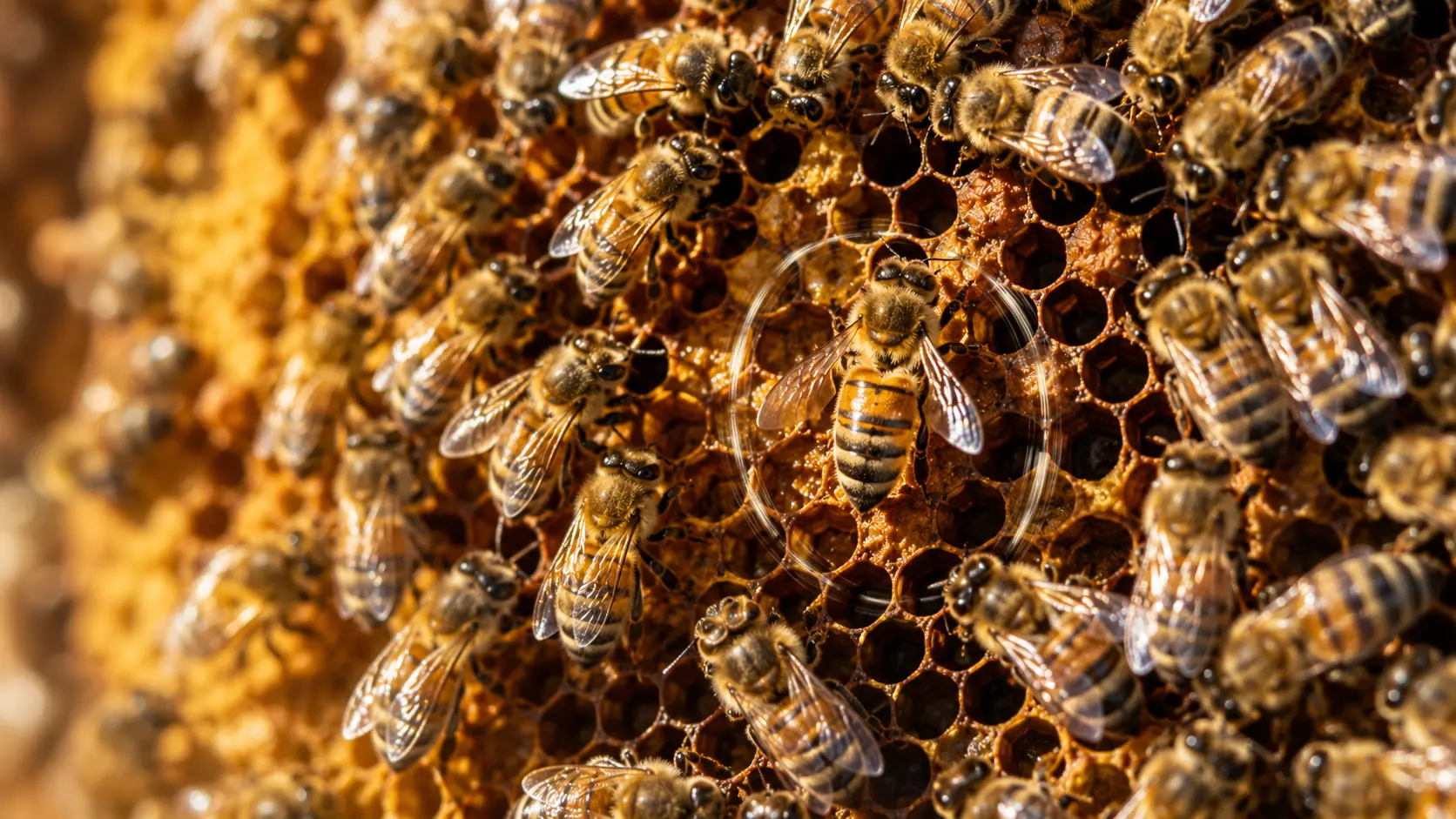
The biggest warning sign is queen cells — large, peanut-shaped structures built along the bottom edges of frames. When you see several of those developing, a swarm could be days away.
Other things to watch: bees covering every surface inside the hive, frames completely packed with brood and honey, or large clusters of bees “bearding” on the outside of the box. A slight slowdown in egg-laying is another clue — the colony often puts the queen on a diet before swarming so she can fly.
Want to learn more about hive management?
Don’t panic. Swarming bees are genuinely calm. They have no hive to protect, no honey stores to defend, and full stomachs. Unless you provoke them, they’re not looking for a fight.
Give them space. Keep your distance and let them be. Scout bees are out looking for a permanent home, and the swarm will usually move on within 24–48 hours on its own.
Call a local beekeeper. This is always the best move. Beekeepers are often thrilled to collect a swarm — it’s essentially a free colony of bees. Reach out to a local bee club, a honey producer nearby, or us directly. We’re happy to help point you in the right direction.
Please don’t spray them. We know it can feel like the obvious solution, but honeybees are responsible for pollinating a huge share of the food we eat. Spraying a swarm causes real harm — to the bees and to the ecosystem around you. If safety is genuinely a concern, call someone who knows what they’re doing.
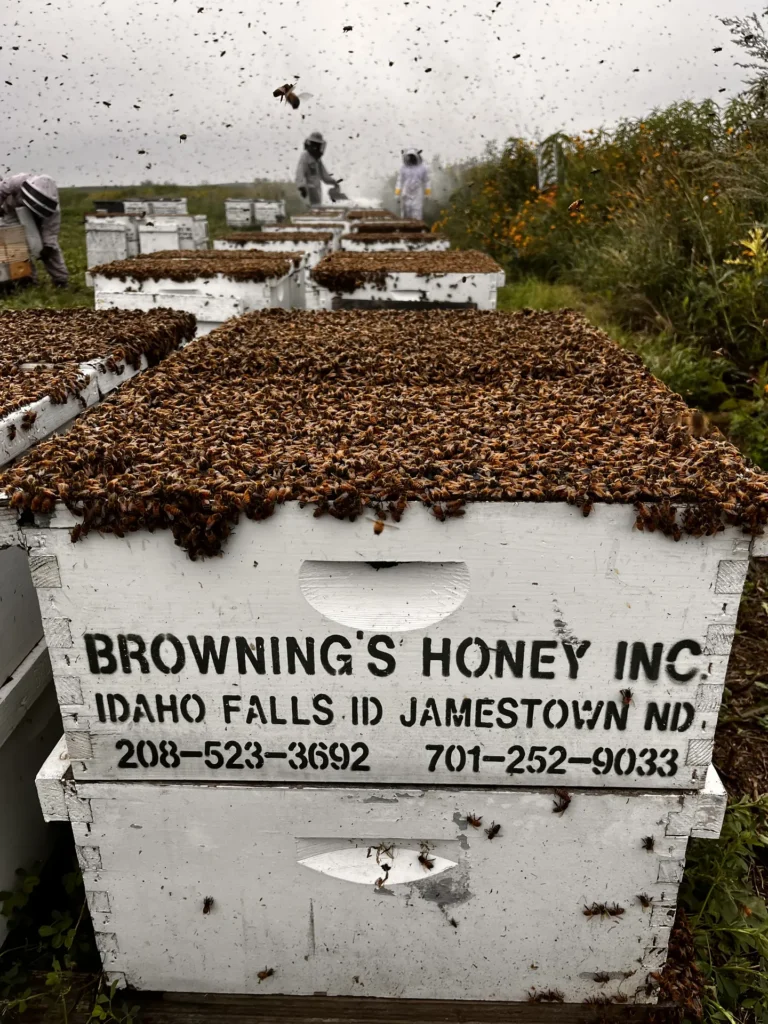
Swarms are easy to misread as a problem. They’re not. They’re bees doing exactly what bees have done for thousands of years — thriving, expanding, and spreading pollination to new corners of the world.
At Browning’s Honey, swarm season is one of our favorite times of year. It means our bees are strong and healthy, and that the season ahead is going to be a good one.
That energy carries straight through to the honey on your table — raw, unfiltered, and handled entirely by us from hive to bottle.
If you ever spot a swarm or just have questions, don’t hesitate to reach out. We love talking bees.
Swarms may look dramatic, but they’re simply nature in motion.
They’re a reminder that:
So next time you see a swarm, take a moment to appreciate it.
It’s not something to fear—it’s something to respect.
Stop by our shop or visit us online to explore our full lineup of raw, unfiltered honey, cream honey, and seasonal favorites.
Because when you support local beekeepers, you’re supporting healthy bees, strong agriculture, and a tradition that’s been passed down for generations.
📍 9019 N 5th E
📍 1475 S. Holmes Ave
🌐 https://browningshoney.com/
A Family Tradition Since 1921
August 20, 2026
July 23, 2026
July 16, 2026
July 10, 2026