World Honey Bee Day: Celebrating the Bees, Beekeepers & a Tradition Worth Protecting
August 20, 2026

Browning's Honey
Buy Raw Honey Online
March 18, 2026
Swarming is one of the most fascinating, and sometimes alarming, natural behaviors of the honey bee. While it may look chaotic, swarming is actually a sign of a healthy, thriving colony. For beekeepers and homeowners, understanding why this happens and how to respond can make a difference in protecting colonies.
Swarming occurs when a single colony splits into two or more groups. Typically, the original queen leaves the hive with about half of the worker bees to establish a new colony, while a new queen remains behind with the rest.
This process usually happens in late spring and early summer, when resources are abundant and colonies are growing rapidly. This period of explosive colony growth begins during the spring buildup, when queens increase egg production and worker populations expand in preparation for the coming honey season.
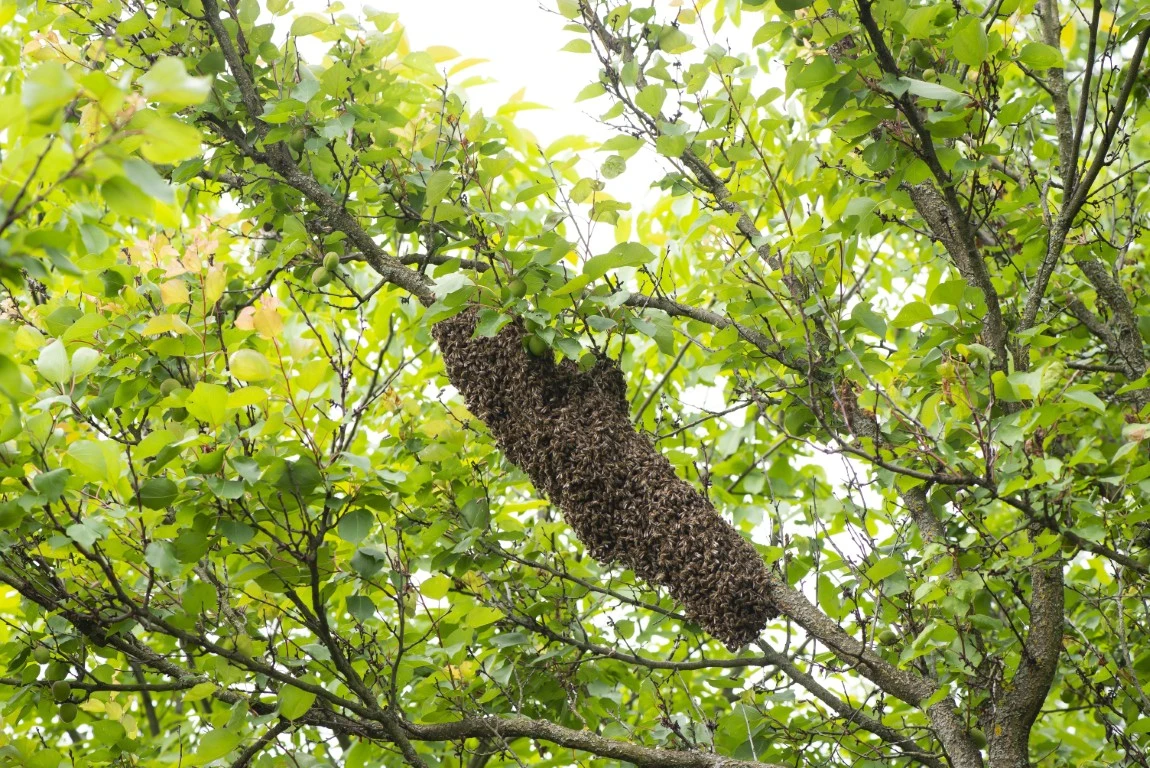
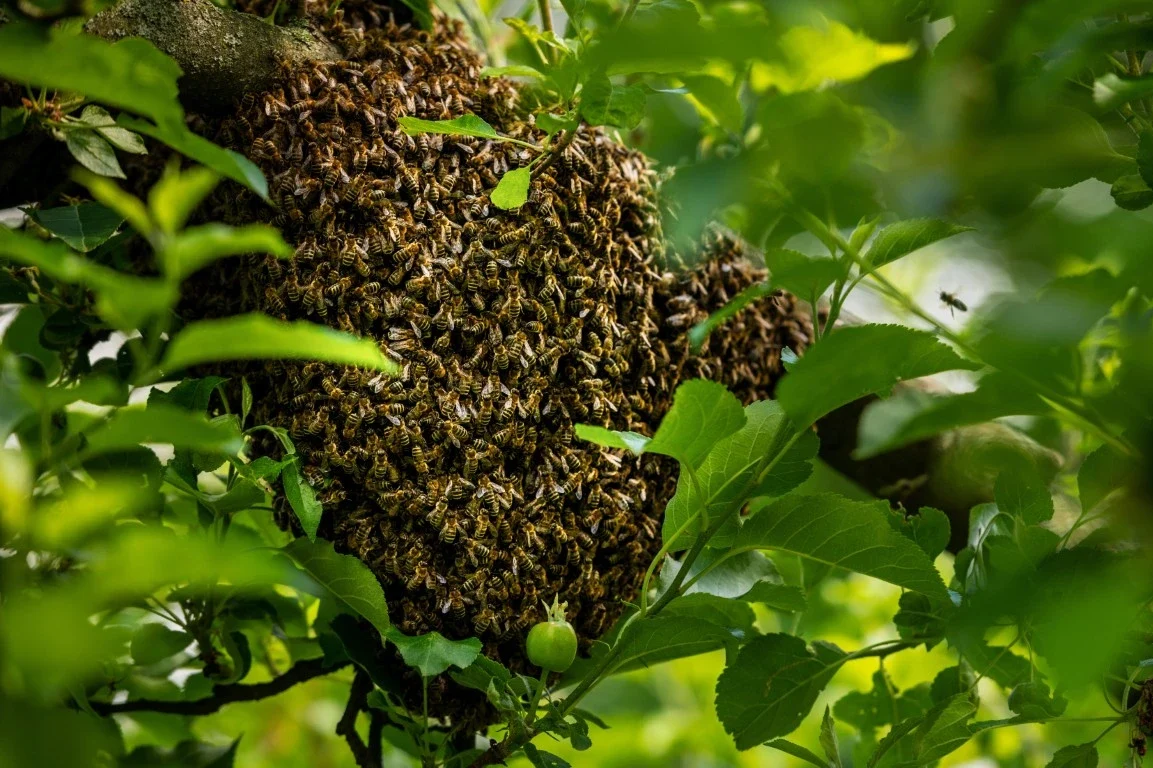
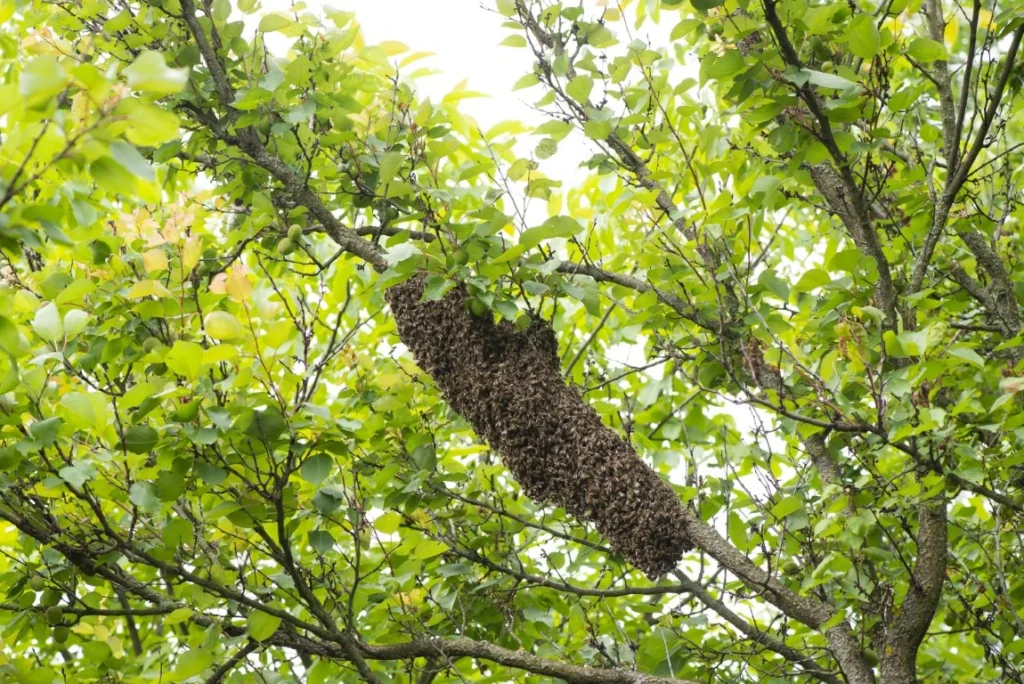
A swarm typically appears as a large, buzzing hanging mass of bees, often on a tree limb or fence.
Swarming is driven by an instinct to protect the health of the colony. Here are the most common causes:
Overcrowding — As a hive becomes packed with bees, brood, and honey, space becomes limited. When there’s no room to expand and the queen to lay eggs, the colony prepares to divide.
Strong Colony Growth — A healthy hive with a productive queen can grow quickly. When the population surges, swarming becomes a natural way to spread and reproduce.
Queen Aging or Decline — If the queen’s pheromone output weakens, worker bees may begin raising a new queen, triggering a swarm.
The relationship between the queen and her workers is more complex than it may seem. Learn more about how each member of the colony contributes in Inside the Hive: The Roles of Queen, Worker, and Drone Bees.
Hive Conditions — A colony may also swarm due to temperature changes, poor ventilation, or other environmental factors affecting the health of the hive.
Seasonal Triggers — Warmer weather, longer daylight hours, and increased nectar flow all indicate that it’s time to reproduce.
Hive Maintenance — Swarming allows for a “breeding pause,” which helps break the cycle of diseases and parasites like Varroa mites.
To prevent swarming, you should watch for these early warning signs:
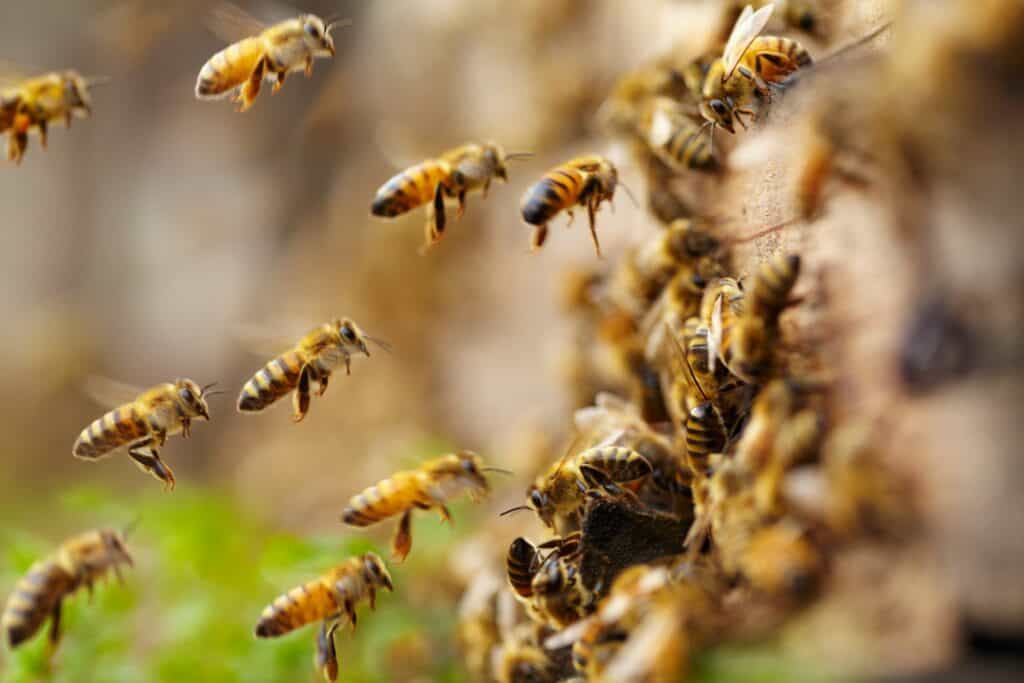
Queen Cells — The presence of multiple capped queen cells on the bottom or sides of a frame indicates that a swarm could happen in as little as a week.
“Backfilling” the Brood Nest — Worker bees fill empty cells in the brood chamber with nectar, leaving the queen with no room to lay eggs.
Clustering Outside the Hive — The hive is so crowded that bees are crammed into every space, often leading to heavy “bearding” (or clustering) on the outside, even in temperate weather.
Reduced Foraging and Activity — Before the actual swarm, foraging activity may slow down as bees prepare to leave. The queen will stop laying eggs to lose weight for the flight.
Increased Drone Population — Drones are made in preparation to mate with a new queen. A healthy, thriving hive has the time and resources to care for a large number of drones.
While swarming is a natural bee behavior, letting bees gather in massive swarms can pose a risk to the public, your bees, other beekeepers, and even honey bee biosecurity in your country.
You may not be able to eliminate this occurrence entirely, but you can reduce the likelihood:
Provide More Space — Add additional boxes (supers) early in the spring to give the colony room to expand.
Split the Hive — Create a controlled split, as this mimics natural swarming and helps manage population growth.
Replace the Queen — Requeen the hive with a younger, more productive queen to stabilize the colony.
Managing queen health is an important part of maintaining strong colonies. Learn more about how beekeepers raise new queens in Queen Grafting Season: The Secret to Strong Hives.
Reverse Brood Boxes — In early spring, switch the top and bottom brood boxes, so the colony can expand upwards.
Regular Inspections — Check the hive frequently during peak season to catch swarm indicators early.
If you encounter a swarm, don’t panic. Swarming bees are usually not aggressive because they have no hive to protect and are focused on finding a new home.
Keep Your Distance — Observe the swarm from a safe distance and avoid making sudden movements.
Call a Local Beekeeper — Many beekeepers are willing to come collect swarms and move them to a safe location.
Avoid Spraying or Disturbing — Swarming bees are beneficial pollinators and should not be harmed. Pesticides are also ineffective against a large number of bees and may make them aggressive.
Give it Time — In many cases, a swarm will move on within a few hours or days if left undisturbed.
Swarming plays an important part in the life cycle of the honeybee. With the right knowledge and proactive hive management, you can reduce its impact and even turn it into a positive experience. Whether you’re a beekeeper or simply a curious observer, learning about swarming can help protect these vital pollinators and keep them from dying prematurely.
Swarming is also a reminder of just how dynamic a healthy honeybee colony can be. From raising new queens and establishing new colonies to gathering nectar and producing In, every season brings changes inside the hive that help honeybee populations grow and thrive.

August 20, 2026
July 23, 2026
July 16, 2026
July 10, 2026