FREE SHIPPING ON ORDERS $20 AND OVER

CALL 208-516-2263

brownings honey logo

Browning's Honey

Buy Raw Honey Online

×
  • Honey Shop
    • Classic Honey
    • Clover Honey
    • Creamed Honey
    • Flavored Honey
    • Honey Butter
    • Beeswax Blocks
  • Our Apiary
  • Benefits of Honey
  • The Buzz
    • Blogs
    • FAQs
    • Honey Facts, Tips, And Recipes
    • Kid’s Corner
    • Upcoming Events
  • Gift Shop
  • Contact Us
    • Refund and Returns Policy

Table of Contents

  • Spring: The Season of Renewal
  • Summer: Peak Honey Flow
  • Fall: Preparing for the Cold
  • Winter: Survival Mode
  • How Humidity Impacts Nectar Production
  • How Beekeepers Adapt to Weather Challenges
  • Weather: An Important Part of Honey Production 
Whipped Honey for sale USA

Weather plays an important role in honey production, influencing everything from nectar availability to bee behavior. Each season brings its own opportunities and challenges for beekeepers, and understanding these patterns is key to maintaining healthy hives and productive harvests. Here’s a closer look at how weather affects honey production throughout the year. 

Spring: The Season of Renewal

Spring typically marks the start of peak honey production time, but success often depends on how the season begins. 

How Spring Weather Helps or Hurts

Warm, Mild Temperatures — Bees become more active as temperatures rise above 50°F. A warm spring allows bees to start foraging earlier and encourages rapid colony buildup.

Consistent Rainfall — Moderate rain supports flowering plants, increasing nectar flows. However, too much rain keeps bees in the hive, limiting foraging time. 

Late Frosts — Sudden cold snaps can damage early blooms like fruit trees and dandelions, reducing the nectar available at a crucial time. 

Impact on Honey Production

A stable, warm spring with balanced rainfall usually leads to strong colonies and excellent early honey flows. Conversely, cold or wet springs often result in lower first-harvest yields. 

Summer: Peak Honey Flow

Summer is typically the most productive season for honey harvesting. 

How Summer Weather Affects Bees

Warm but Not Scorching Heat — Ideal conditions allow bees to fly frequently and access abundant blooming plants. 

Hot, Dry Weather — An extended drought can cause plants to produce less nectar or even stop blooming altogether, reducing honey flow. It can also force bees to expend extra energy to cool their hive. 

Storms and High Winds — Severe weather can limit foraging days or damage flowering plants, lowering nectar supply. Persistent wind can dry out flowers, reducing available nectar.

Impact on Honey Production

With steady rain, warm temperatures, and plenty of blooms, summer provides the highest honey yields. But droughts or extreme heat waves can significantly reduce production and stress bee colonies. 

Fall: Preparing for the Cold
How Weather Impacts Honey Production Each Season

By fall, bees shift their focus from honey production to winter preparation. 

Weather Factors That Matter in Fall

Cool, Dry Conditions — Bees slow down when temperatures drop, reducing foraging activity. 

Late-Season Rain — Timely rainfall can boost blooms, like goldenrod and asters, giving bees a final nectar flow. 

Early Freezes — Freezing temperatures end the nectar season abruptly. 

Impact on Honey Production

Fall honey yields vary significantly by region, but favorable weather with late blooms helps bee colonies build up winter stores and gives beekeepers a smaller, but valuable, late harvest. 

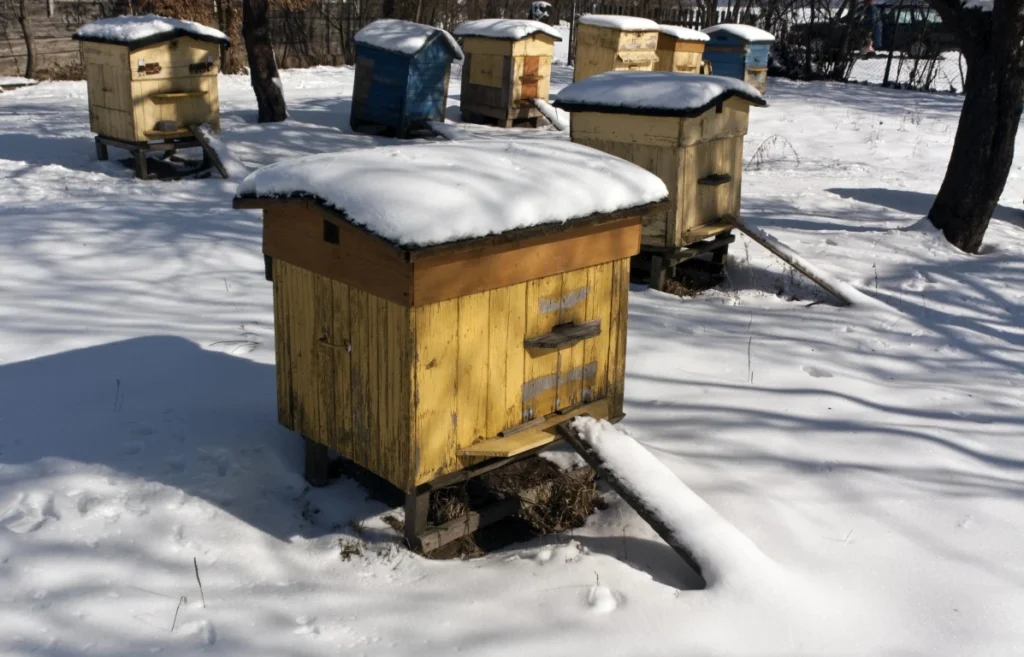
Winter: Survival Mode

Winter weather doesn’t directly affect honey production, but it has a major impact on the following season’s success. 

How Winter Conditions Affect Honey Bees

Cold but Stable Temperatures — Bees cluster tightly and consume stored honey at a steady rate. 

Harsh, Unpredictable Winters — Sudden warm spells can trigger unnecessary foraging attempts, wasting energy and honey stores. Severe cold snaps can also stress weakened colonies. 

Moisture and Condensation — Cold, damp conditions inside the hive are more dangerous than cold alone. Moisture can chill bees and increase mortality. 

Impact on Future Honey Production

Strong overwintered colonies often lead to excellent spring production. Weak or stressed colonies take longer to rebuild, reducing early-season yields. 

How Humidity Impacts Nectar Production

In addition to weather conditions, humidity levels can influence how much nectar plants produce:

High Humidity — This can cause nectar to stay diluted, meaning bees must work harder to evaporate excess moisture when making honey. 

Low Humidity — This can cause nectar to thicken or plants to stop producing nectar altogether during drought conditions. 

How Beekeepers Adapt to Weather Challenges

Beekeepers use several strategies to support their colonies through varying weather patterns:
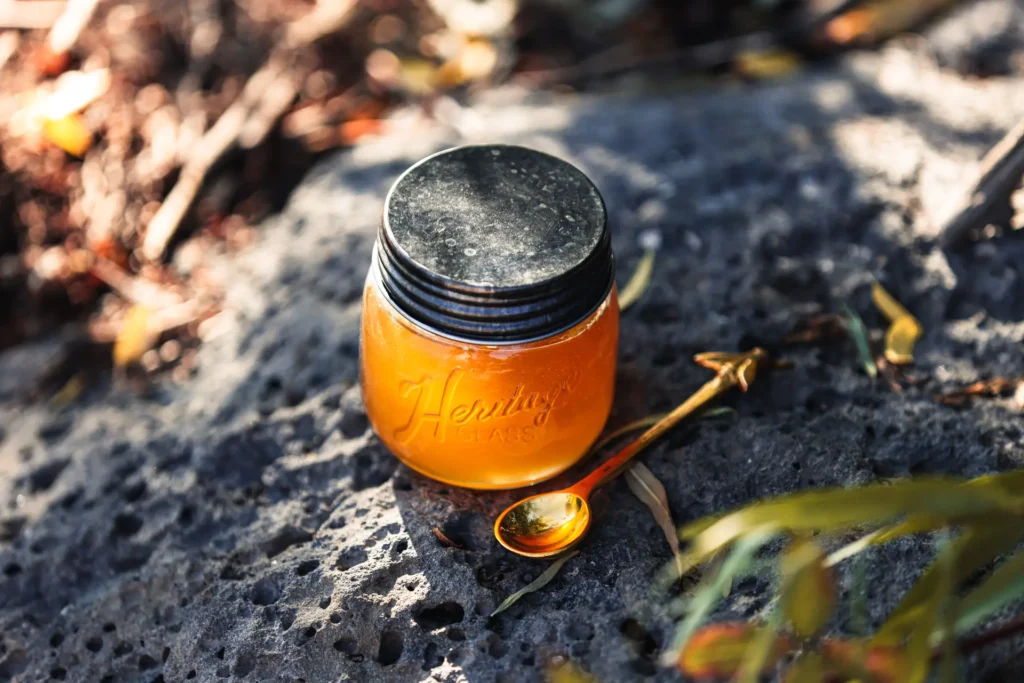
How Weather Impacts Honey Production Each Season
  • Providing supplemental feeding during droughts or cold spells, which could include sugar syrup or pollen substitutes  
  • Ensuring proper hive ventilation to prevent moisture buildup or relieve heat stress
  • Planting or supporting diverse forage sources
  • Offering shade or water sources during extreme heat
  • Strategically place windbreaks around the apiary to protect hives from cold or strong winds
  • Monitoring colony strength before winter and making necessary adjustments 
  • Placing apiaries in locations that offer protection from the elements 

Weather: An Important Part of Honey Production 

Weather shapes every part of the beekeeping cycle, influencing colony health, nectar availability, and overall honey yields. While each season brings its own set of challenges, understanding how temperature, rainfall, and season shifts affect bee behavior allows beekeepers to better prepare and adapt. With the right management and keeping a close eye on changing conditions, beekeepers can help their colonies thrive and enjoy more consistent, high-quality honey production year after year. 
Filed Under: Honey

Table of Contents

  • Myth #1: All Bees Sting
  • Myth #2: Bees Are Aggressive
  • Myth #3: All Bees Live in Hives
  • Myth #4: Bees Only Make Honey
  • Myth #5: Bees Are Just Pests
  • Myth #6: Bee Populations Are Stable
  • Bee Myth #7: Bees Live a Long Time
  • Bee Myth #8: Wasps are Bees 
  • Bees: More Gentle and Fascinating than People Believe 

Bees are some of the most misunderstood creatures on the planet. While they’re vital for pollination and maintaining ecosystems, countless myths have painted these insects as nothing more than nuisances that like to sting humans. Today, we will set the record straight and uncover what most people get wrong about bees. 

Bee Myths & Misconceptions

Myth #1: All Bees Sting

One of the most common misconceptions is that every bee can sting. In reality, only female bees have stingers, and many species are completely harmless to humans. Male bees, called drones, don’t sting at all. Additionally, some bees are naturally non-aggressive and will only sting if threatened or provoked.

Another misconception is that bees die after they sting. This is only true of honeybee workers, whose barbed stingers get lodged in the skin and cause fatal injuries when they try to fly away. Many other bees, such as bumblebees, have smooth stingers and can sting multiple times.

Myth #2: Bees Are Aggressive

Bees get a bad reputation for being aggressive, but the truth is quite the opposite. Most bees are focused on gathering nectar and pollen and don’t care to bother humans. A bee’s stinger is actually a last-resort mechanism; they are more likely to fly away than attack. Approaching the hive calmly and avoiding sudden movements significantly reduces the risk of stings.

Myth #3: All Bees Live in Hives

While honeybees are well-known for their hives, not all bees live in large colonies. Many species are solitary, nesting in the ground, hollow stems, or wood. These solitary bees are just as crucial for pollination as hive-dwelling honeybees. 

Fun Fact: While bee colonies consist of 20,000 to 60,000 bees, only 10% of bees worldwide are actually social and live in hives.

Myth #4: Bees Only Make Honey

Honey is just one of the amazing products bees produce, and only a few species, like the honeybee, actually make it. Bees are essential pollinators, contributing to the growth of fruits, vegetables, and flowers. Without them, our food supply and ecosystems would suffer. 

How Do Bees Make Honey

Myth #5: Bees Are Just Pests

While some people view bees as nuisances, they are indispensable to the environment. Bees pollinate approximately one-third of the food we eat, supporting biodiversity and helping plants reproduce. Without bees, many crops would fail. 

Myth #6: Bee Populations Are Stable

A dangerous misconception is thinking bees are continuing to thrive everywhere. The truth is, many bee populations are declining due to habitat loss, pesticide use, disease, and climate change. Protecting bees is crucial not just for their survival but for the well-being of the planet. 

To help protect bees, you should:

Plant Bee-Friendly Flowers — When landscaping or growing a garden, choose a variety of native plants that bloom through the season to provide a consistent food source 

Avoid Pesticides and Herbicides — Many chemicals pose a risk to bees. If you must use them, apply them at night when bees are not active and never spray flowers or anything about to bloom. 

Provide Nesting Sites — Install bee hotels, or create your own by drilling holes in wood or bunching hollow plant stems together. Also, leave patches of bare soil and standing plant stems for ground-nesting bees. 

Buy Local and Organic — Purchase honey from local beekeepers who use humane practices. Choose organic produce to support farming methods that use fewer pesticides. 

Bee Myth #7: Bees Live a Long Time

Most worker bees have a very short life span, often only a few weeks during the summer, just long enough for them to mate, build nests, and produce offspring. Only the queens live long lives: Honey bee queens can live for several years, while bumblebee queens can live up to one year. 

Honey Farm Idaho

Bee Myth #8: Wasps are Bees 

Even though wasps belong to the same order of insects as bees, they are actually not bees. Wasps are carnivores and can be very aggressive (espeically if you disturb their homes), in contrast to bees, which are vegetarians and most often docile.

Bees: More Gentle and Fascinating than People Believe 

Bees are much more than the occasional nuisance or stinger people often imagine. They are essential pollinators, environmental heroes, and fascinating creatures with complex behaviors. By debunking these common myths, you can better appreciate their critical role in our ecosystem and take steps to protect them. The next time you see a bee buzzing around, remember that it won’t hurt you; it’s too busy helping sustain life on earth.

Filed Under: Honey

Table of Contents

  • Honeybee Hives 
  • Bumblebee Nests
  • Carpenter Bee Nests
  • Mason Bee Nests
  • Leafcutter Bee Nests
  • Mining Bee Nests
  • Bee Nests: A Show of Creativity and Ingenuity 

Bees are some of the most fascinating creators in nature — not only for their role in pollination but also for the variety of ways they build their homes. While many people picture the classic honeycomb hive when they think of bees, not all of them live in large colonies or make honey. In fact, different species create unique types of nests depending on their environment, habits, and survival needs. 

bee nests

Let’s explore the most common types of bee nests and what makes each one special. 

Honeybee Hives 

Honeybee hives consist of a series of wax combs filled with hexagonal cells used to store honey and pollen and raise young bees. They are found in hollow trees or rock crevices or are made and managed by beekeepers. Honeybees build their hives by consuming honey and producing beeswax. They then chew beeswax to make it soft and malleable, allowing it to be shaped into the honeycomb cells. 

The cells are arranged in a specific way, with the honey stored at the top, pollen in the middle, and the bees in the lower part. They design their home in a hexagonal shape because it uses the least amount of wax to hold the most volume. Honeybees regulate the temperature inside their hives, keeping it around 95 degrees for the colony’s health. 

Bumblebee Nests

Bumblebee nests consist of small, messy, ball-like wax structures often lined with grass or moss. They are found in underground burrows (often abandoned rodent holes), under compost heaps, or in grassy tussocks. These bees line the nests with insulating material like dry grass, fur, or leaves to keep the colony warm and often cover it with a protective wax cap. 

Unlike honeybees, bumblebee colonies only last one season, dying out in winter except for the new queens. In the spring, the new queen emerges from hibernation and establishes a nest from scratch. She creates wax pots to store nectar and pollen for energy and lays her eggs in cells on top. As workers hatch, they help grow the nest, which can contain hundreds of bees during the peak season. 

Carpenter Bee Nests

Carpenter bee nests consist of tunnels burrowed into untreated wood, such as decks, fences, eaves, or dead trees. Females create neat, round entry holes about the size of a dime using their strong mandibles, before turning at a right angle to follow the grain. They add a series of chambers within this tunnel, adding a ball of pollen and a single egg to each. These solitary bees may also reuse and expand existing tunnels, returning to the same nesting area for generations. 

While carpenter bees drill into wood to create nesting tunnels, they don’t actually eat it. 

Mason Bee Nests

These solitary pollinators live in mud- or clay-lined cells, often in hollow stems, cracks, or pre-made bee houses. You can find their nests in gardens, orchards, and areas with plenty of natural cavities. Each cell in the nest contains bee larvae, pollen, and nectar, and is sealed with a final, thick layer of mud. Mason bees are excellent pollinators — one mason bee can pollinate as much as 100 honeybees.

Leafcutter Bee Nests

Leafcutter bee nests consist of tubular structures lined with circular pieces of leaves carefully cut by the female bee. You can find them in hollow twigs, soil burrows, or a bee house. Each leaf-lined cell contains a ball of nectar and pollen, a single egg, and a leaf-disk cap to seal the chamber. 

Leafcutter bees are gentle and rarely sting, making them a favorite among gardeners. Minor leaf damage from their nesting activities is considered a sign of a healthy garden ecosystem. 

Beeswax for sale USA

Mining Bee Nests

Mining bees live in cone-shaped piles of loose soil that contain a hole leading into underground tunnels and chambers for the queen’s larvae. They are found in sandy soils, lawns, and field edges, and while they may look like ants when digging, mining bees are harmless and excellent spring pollinators. Hundreds or thousands of mining bees may nest in the same area, creating a noticeable patch of activity for a few weeks in the spring. 

Bee Nests: A Show of Creativity and Ingenuity 

Bee nests come in all shapes and sizes, reflecting the incredible diversity of the bee world. From the bustling honeybee hives to the solitary tunnels of carpenter and mason bees, each type of nest plays a role in supporting pollination and biodiversity. Understanding how each bee species creates its nest helps us not only appreciate them but also reminds us how important it is to protect their habitats.

Filed Under: Honey

  • « Previous Page
  • 1
  • 2
  • 3
  • 4
  • 5
  • …
  • 10
  • Next Page »
Shop Online

Locations

9019 N 5 E
Idaho Falls, Idaho 83401

1475 S Holmes Ave.
Idaho Falls, ID 83404
(On S Holmes between 14th and 15th Street)

208-516-2263

Menu

  • Honey Shop
  • Our Apiary
  • Benefits of Honey
  • The Buzz
  • Gift Shop
  • Contact Us

Hours

Monday 9:00 AM - 5:00 PM
Tuesday 9:00 AM - 5:00 PM
Wednesday 9:00 AM - 5:00 PM
Thursday 9:00 AM - 5:00 PM
Friday 9:00 AM - 5:00 PM
Saturday 10:00 AM - 4:00 PM
Sunday CLOSED

Refund & Returns Policy

Refund & Returns Policy

Browning’s Honey

© 2026 Browning's Honey | All Rights Reserved | Privacy Policy | Terms | XML Sitemap | Sitemap | Accessibility | Anti Discrimination | Site by PDM

Your cart (items: 0)

Products in cart

Product Details Total
Subtotal $0.00
Shipping, taxes, and discounts calculated at checkout.
View my cart
Go to checkout

Your cart is currently empty!

Start shopping