FREE SHIPPING ON ORDERS $20 AND OVER

CALL 208-516-2263

Idaho Falls Idaho Beeswax

Browning's Honey

Buy Raw Honey Online

×

Your cart is currently empty!

  • Honey Shop
    • Classic Honey
    • Clover Honey
    • Creamed Honey
    • Flavored Honey
    • Honey Butter
    • Beeswax Blocks
  • Our Apiary
  • Benefits of Honey
  • The Buzz
    • Blogs
    • FAQs
    • Honey Facts, Tips, And Recipes
    • Kid’s Corner
    • Upcoming Events
  • Gift Shop
  • Contact Us
    • Refund and Returns Policy

Home | Archives for Cynthia Browning | Page 4

Table of Contents

  • The Dos
  • The Don’ts
  • How to Add Honey to Your Food 
  • Honey: A Versatile Addition to Your Kitchen 
Cooking with Honey: Dos and Don’ts for Best Flavor

Not only is honey a great natural sweetener — it’s a versatile ingredient in cooking that can transform both sweet and savory dishes. From glazing roasted vegetables to enhancing baked goods, honey adds depth, complexity, and a touch of natural sweetness. However, to get the best results, it’s important to know how to use it properly. Here are some key dos and don’ts when using honey. 

The Dos

Do Pair Honey with Complementary Flavors

Each variety of honey has unique notes, from floral or fruity to earthy or even spicy. Pair lighter honeys (like clover or orange blossom) with delicate foods such as teas, dressings, or yogurt, and dark honeys (like buckwheat) with bold flavors like roasted meats, strong cheeses, or whole grains. 

Do Use Honey in Marinades and Glazes

Honey caramelizes beautifully, giving meats, vegetables, and baked goods a golden, flavorful finish. It also helps marinades stick better to foods. However, note that honey browns faster than sugar, so monitor cooking times closely. 

Do Substitute Honey for Sugar (with Adjustments)

Honey is sweeter than granulated sugar, so you don’t need to use as much when baking and cooking. Generally, replace 1 cup of sugar with 3/4 cup of honey. If you want to balance out the sweetness of honey, add a bit of acidity, such as a bit of lemon juice or a dash of vinegar. 

Honey also adds moisture, which can help baked goods stay softer and squishier for longer. However, you will want to reduce the liquids in your recipe by 1/4 cup to compensate. 

Do Store Honey Correctly

Honey can absorb moisture from the air, so keep it in a tightly sealed container in a cool, dry place away from direct sunlight. It may crystallize over time, but that’s natural. Before cooking, simply warm it gently in hot, not boiling, water for 10 to 15 minutes to return it to liquid form. 

The Don’ts

Don’t Overheat Honey

Excessive heat can destroy honey’s delicate flavor notes and beneficial enzymes. Prolonged heating can also form a compound that is toxic in high concentrations. If using in baking, it’s fine, but avoid boiling honey directly. Add it toward the end of cooking when possible. 

Don’t Feed Honey to Infants 

Honey can contain spores of a bacterium that causes botulism in babies under one year old. Botulism is a rare but serious condition that can cause muscle weakness, paralysis, and even death. Avoid feeding honey to children untill they are older.

Cooking with Honey: Dos and Don’ts for Best Flavor

Don’t Forget About Honey’s Intensity

Honey is naturally sweet and flavorful, especially buckwheat or maunka varieties, so using too much can overpower a dish. Start small, taste, and adjust if needed. 

Don’t Store Honey in the Fridge 

Don’t refrigerate honey, as this could accelerate the crystallization process and make it harder to use. Room temperature storage keeps it smooth and spreadable. 

Don’t Bake at the Same Temperature 

Because honey caramelizes and burns faster than sugar, you may want to lower your oven temperature by 25 degrees when baking to prevent over-browning. 

Don’t Add Honey to Cold Liquids

Honey has a thick consistency, making it difficult to incorporate smoothly into cold marinades, dressings, or beverages. To fix this, warm the honey gently before adding. 

Don’t Make a Sticky Mess when Measuring 

Coat your measuring cup or spoon with a light layer of cooking spray or hot water before adding honey. This will allow it to slide out cleanly, leaving no sticky residue behind.

How to Add Honey to Your Food 

For Sweet Dishes 

  • Drizzle honey on pancakes, waffles, oatmeal, and yogurt.
  • Use it in cakes, cookies, and pies.
  • Add it to ice cream or fruit.  
  • Add it to tea or other hot drinks for a touch of sweetness. 
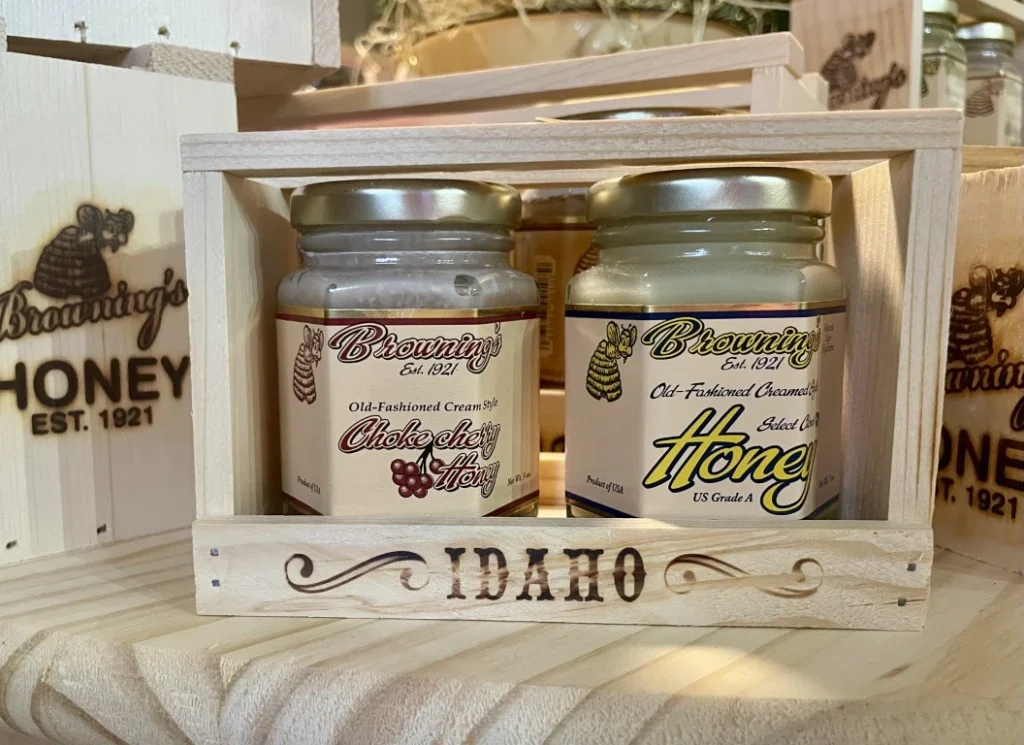
Browning's Honey Platter Idaho Falls

For Savory Dishes 

  • Mix honey with soy sauce, garlic, and ginger for a quick marinade for salmon or chicken before cooking or roasting. 
  • Drizzle it over cheese and cured meats for a sweet and salty combination. 
  • Combine it with mustard to make a dipping sauce or into a vinaigrette for a balanced dressing. 
  • Drizzle over a warm biscuit, cornbread, or even a pizza for a contrasting flavor. 

Honey: A Versatile Addition to Your Kitchen 

Honey is more than just a natural sweetener; it’s a flavor enhancer that can bring out the best in both savory and sweet dishes. By pairing it thoughtfully, using it at the right stage of cooking, and avoiding overheating or overusing, you can preserve its natural goodness and enjoy its full flavor. With these simple dos and don’ts in mind, you can make honey a regular ingredient in your kitchen.

Filed Under: Honey

Table of Contents

  • The Queen Bee: A Life of Reproduction  
  • The Worker Bees: The True Powerhouse
  • Don’t Forget the Drones: The Short-Lived Males
  • Why You Should Understand Hive Dynamics 
  • So, Who’s Really in Charge?
Inside the Hive: The Roles of Queen, Worker, and Drone Bees

When you think of a beehive, you may imagine the queen bee reigning supreme and commanding her loyal workers like a monarch on a throne. However, that may not actually be the reality of the hive. The truth is more complex — and fascinating — than most people realize. Let’s take a closer look at the roles of queen, worker, and drone bees to discover who’s really in charge, and how a beehive operates.

The Queen Bee: A Life of Reproduction  

The queen bee is the only fertile female in a healthy hive, and she is responsible for laying all the eggs, which is up to 2,000 per day during the peak season. She’s born from a regular egg, just like worker bees, but is fed a diet of royal jelly, which triggers her transformation into a queen. Royal jelly contains more honey and pollen than the “larve jelly” eaten by workers and drones, and allows queens to grow larger than other females. 

Bees become queens only because, as eggs, they got lucky and were laid in cells specifically designated for raising queens. It’s a matter of sheer luck. 

But rather than a queen, she is more of the mother of the hive, spending her days:

  • Laying eggs to ensure the colony’s future.
  • Releasing pheromones that regulate the behavior of other bees. 
  • Maintaining hive unity through chemical communication.

Despite her title, the queen doesn’t “rule” the hive in the traditional sense. She never gives out orders or makes strategic decisions. 

The Worker Bees: The True Powerhouse

Worker bees are all female and make up the vast majority of the colony. These multitaskers go through different roles throughout their lives, starting as nurse bees and eventually becoming foragers. 

Inside the Hive: The Roles of Queen, Worker, and Drone Bees

Except for reproduction, worker bees handle everything, including:

  • Feeding larvae 
  • Cleaning and clearing out debris 
  • Building the hive and honeycomb (a small section may take hundreds of bees to build)
  • Guarding the hive entrance
  • Gathering pollen, nectar, propolis, and water
  • Regulating hive temperature 
  • Making repairs
  • Cleaning other bees
  • Capping honeycomb, packing pollen, and ripening nectar into honey 

Additionally, since the queen bee is so busy laying eggs, she has worker bee attendants who follow her around all day, feeding and cleaning her. 

Worker bees also decide when it’s time to replace the queen — either due to age, health, or pheromone decline. In those cases, they’ll raise a new queen by feeding selected larvae royal jelly. Thus, worker bees not only run the hive, but they also control its leadership. 

Don’t Forget the Drones: The Short-Lived Males

While queen and worker bees are both female, drone bees are the male members of the colony — and they live a very different life. There are approximately 100 female worker bees for every drone.

What Do Drones Do?

  • Their sole purpose is to mate with a virgin queen.
  • They don’t collect nectar, build honeycomb, or defend the hive.
  • After mating (if they’re successful), they die immediately 
  • If they don’t mate, they’re often expelled from the hive before winter, since they consume resources but don’t contribute to survival tasks. 

Drone bees are incapable of feeding themselves or foraging for food. They also don’t have a stinger. 

So, Why Keep Drones at All?

Even though drones don’t help with hive maintenance, their genetic diversity plays an essential role in the health of bee populations. A successful mating event ensures the next queen will produce robust and diverse offspring. 

Why You Should Understand Hive Dynamics 

Understanding the dynamics of the hive helps people appreciate the complexity of nature — and the importance of each bee’s role. It also offers insights into teamwork, leadership, and even community resilience. It also gives you a newfound appreciation for the hard role of worker bees. 

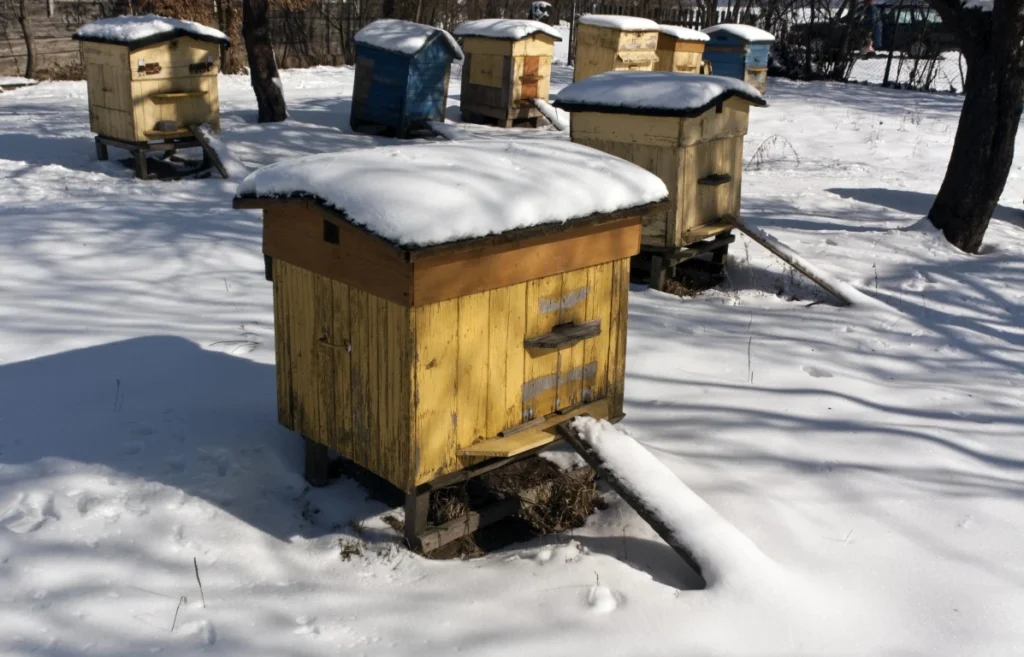
Our Apiary Browning's Honey

Here are some details to help you identify the different types of bees:

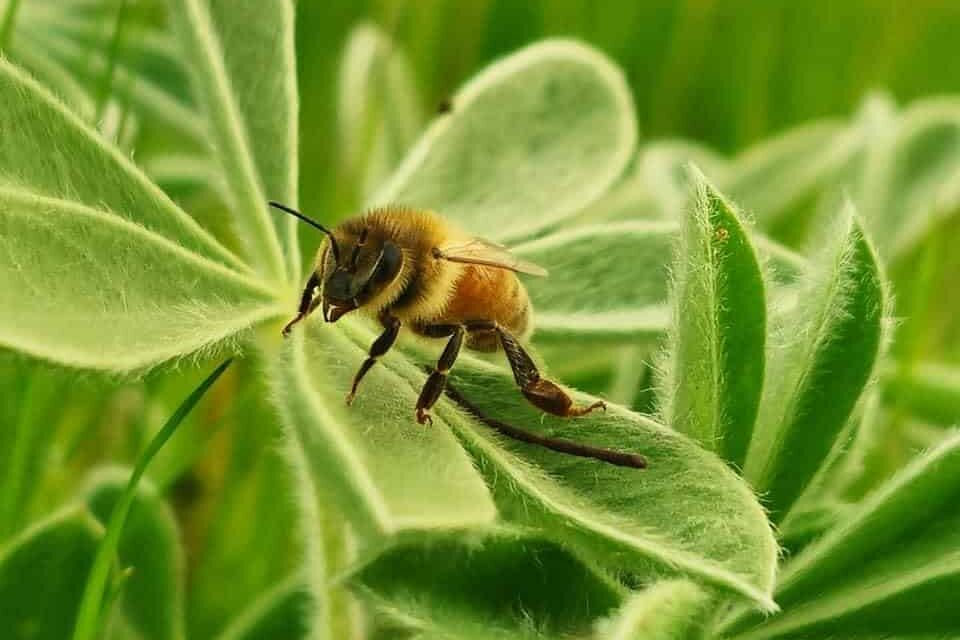
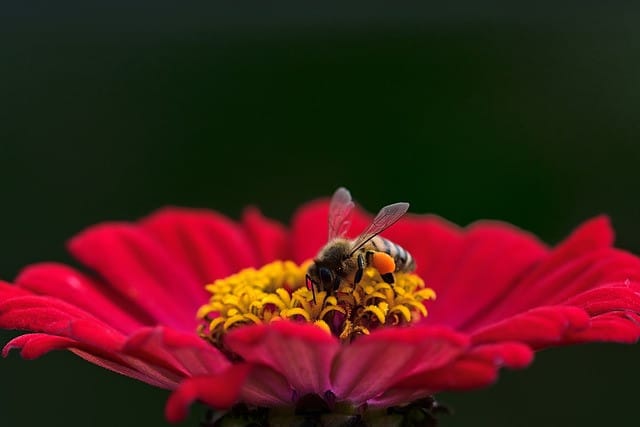
Worker Bee — This bee has a smaller body and is often seen around flowers.

Queen Bee — The queen is caramel-colored with a longer body. You may not ever see her, though, as she rarely leaves the hive. 

Drone Bee — Drone bees have large eyes, a wide body, and a round butt. 

So, Who’s Really in Charge?

While the queen is vital to the hive’s survival, she’s more a biological necessity than a ruler. The worker bees make most of the decisions, including where to move the hive, when to swarm, and when to kill the old queen and raise a new one. 

Their collective intelligence and communication allow the colony to adapt, survive, and thrive. Thus, the worker bees are the ones who run the hive. 

Filed Under: Honey

Table of Contents

  • Plant Bee-Friendly Flowers
  • Skip the Pesticides
  • Buy Local Honey and Bee Products
  • Leave the Weeds
  • Create Bee Hotels or Habitats
  • Understand the Types of Bees
  • Educate and Advocate 
  • Small Changes, Big Impact
How to Support Honey Bees

Honey bees play a vital role in pollinating the plants that produce much of our food. Unfortunately, their populations have been declining due to habitat loss, pesticide use, parasites, and disease. The good news? You don’t need to be a beekeeper to help. You can support your local bee population from your own backyard and neighborhood.

Plant Bee-Friendly Flowers

Bees rely on flowers for nectar and pollen. You can support them by planting a variety of native, pollinator-friendly plants. Because they become active during specific times of the year, make sure you plant flowers that bloom from early spring to late fall to ensure bees have a constant food source. 

Top picks include:

  • Lavender
  • Coneflower (Echinacea)
  • Bee balm
  • Black-eyed Susans
  • Sunflowers
  • Milkweed (which also benefits monarch butterflies)

Avoid hybrid flowers; they may look pretty, but they offer little nectar or pollen. If you find it difficult to find native plants in your area, research non-invasive pollinator-friendly alternatives appropriate to your location. 

If possible, consider also planting trees, such as maple trees, fruit trees, dogwood trees, serviceberry trees, and other bee-friendly species. Trees provide bees with more food and spaces to nest, especially in the early spring before smaller plants begin to bloom. 

Fun Fact: Bees must visit two million flowers to make one pound of honey. 

Skip the Pesticides

Even small amounts of pesticides — especially neonicotinoids — can be deadly to bees. Opt for organic gardening practices, natural pest control methods, or bee-safe alternatives if you must treat plants. 

Instead of pesticides, consider using:

Neem Oil — This is a broad-spectrum insecticide and fungicide derived from the neem tree. It works against pests, such as aphids, scale, and whiteflies. While considered safe for bees, avoid spraying directly on open blooms, where bees are. 

Insecticidal Soap — These soaps are made from fatty acids and work against soft-bodied insects like aphids, mites, and whiteflies by disrupting the insects’ cell membranes. Like neem oil, avoid spraying when bees are present. 

Provide Fresh Water

Like all creatures, bees need water. Add a shallow dish with clean water and pebbles or twigs where they can land safely. Place it near flowering plants or shaded areas to create a bee oasis. Dumb the water every few days and replace it with fresh water to eliminate any mosquito larvae in the water. 

If you come across a sleepy or lethargic bee, you can try offering it a solution of water and sugar to boost its energy. 

How to Support Honey Bees

Buy Local Honey and Bee Products

Support your local beekeepers by buying raw, unfiltered honey, beeswax candles, and other bee-made products from farmers’ markets and local shops. This helps fund responsible, sustainable beekeeping practices that benefit bee populations directly. 

Browning’s Honey supports local bees by staying up to date on the latest research and stewardship practices and remaining dedicated to protecting and helping bees thrive. 

Leave the Weeds

Not all weeds are bad — clover, dandelions, and goldenrod are great food sources for bees, especially in early spring or late fall. Letting parts of your yard grow a little wild can make a big difference. 

Create Bee Hotels or Habitats

Many native bees, like mason bees, don’t live in hives but instead nest in the ground or hollow stems. You can help by: 

  • Leaving bare patches of soil.
  • Creating bee hotels using bundles of bamboo or drilled wood.
  • Not disturbing leaf litter or fallen branches during nesting seasons. 
  • Leave plant stems standing through winter.

Be mindful when mowing and make sure you don’t destroy any underground bee nests. 

Understand the Types of Bees

Not all bees you encounter will be honey bees. North America is home to over 4,000 species, including bumblebees, mason bees, and leadcutter bees. Many of these are more efficient pollinators than honey bees. Supporting honey bees means supporting all bees, as they all work together to support the ecosystem.

How to Support Honey Bees

Educate and Advocate 

Talk to your neighbors about bee-friendly gardening, support local conservation efforts, and encourage your community to plant pollinator gardens in shared spaces like schools and parks. Encourage local governments to adopt policies that promote bee habitats and reduce pesticide use. 

Small Changes, Big Impact

One-third of the food we consume relies on pollinators. To support local honey bees, you don’t need a hive or a garden full of bees to make a difference. You just need to plant the right flowers, avoid pesticides, and make conscious choices about what you buy and how you garden. By creating a welcoming environment, you ensure bees and the ecosystems they support can thrive. 

Filed Under: Honey

  • « Previous Page
  • 1
  • 2
  • 3
  • 4
  • 5
  • 6
  • …
  • 9
  • Next Page »
Shop Online

Locations

9019 N 5 E
Idaho Falls, Idaho 83401

1475 S Holmes Ave.
Idaho Falls, ID 83404
(On S Holmes between 14th and 15th Street)

208-516-2263

Menu

  • Honey Shop
  • Our Apiary
  • Benefits of Honey
  • The Buzz
  • Gift Shop
  • Contact Us

Hours

Monday 9:00 AM - 5:00 PM
Tuesday 9:00 AM - 5:00 PM
Wednesday 9:00 AM - 5:00 PM
Thursday 9:00 AM - 5:00 PM
Friday 9:00 AM - 5:00 PM
Saturday 10:00 AM - 4:00 PM
Sunday CLOSED

Refund & Returns Policy

Refund & Returns Policy

Browning’s Honey

© 2025 Browning's Honey | All Rights Reserved | Privacy Policy | Terms | XML Sitemap | Sitemap | Accessibility | Anti Discrimination | Site by PDM