Back to School with Honey: Simple & Delicious Ways to Fuel Busy School Days
September 24, 2026
Browning's Honey
Buy Raw Honey Online
July 16, 2026
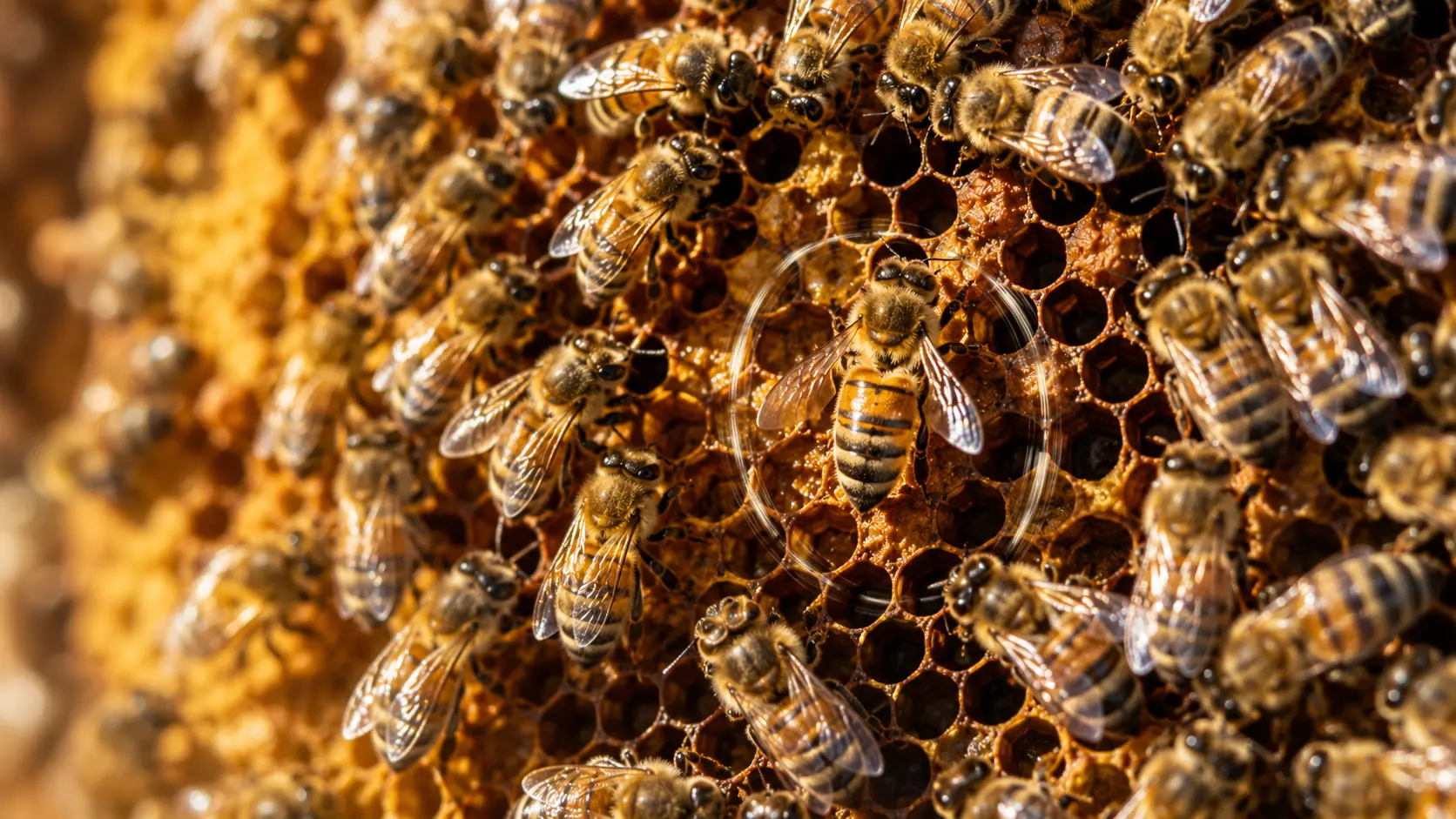
Have you ever wondered how thousands of honey bees work together so efficiently? Every day, foraging bees leave the hive in search of nectar and pollen, often traveling miles across fields, orchards, and gardens. Yet somehow, when one bee discovers a rich source of flowers, hundreds of her sisters seem to know exactly where to go.
There are no maps, no GPS, no spoken language, and no text messages.
Instead, honey bees rely on one of the most remarkable forms of communication found anywhere in nature: the waggle dance.
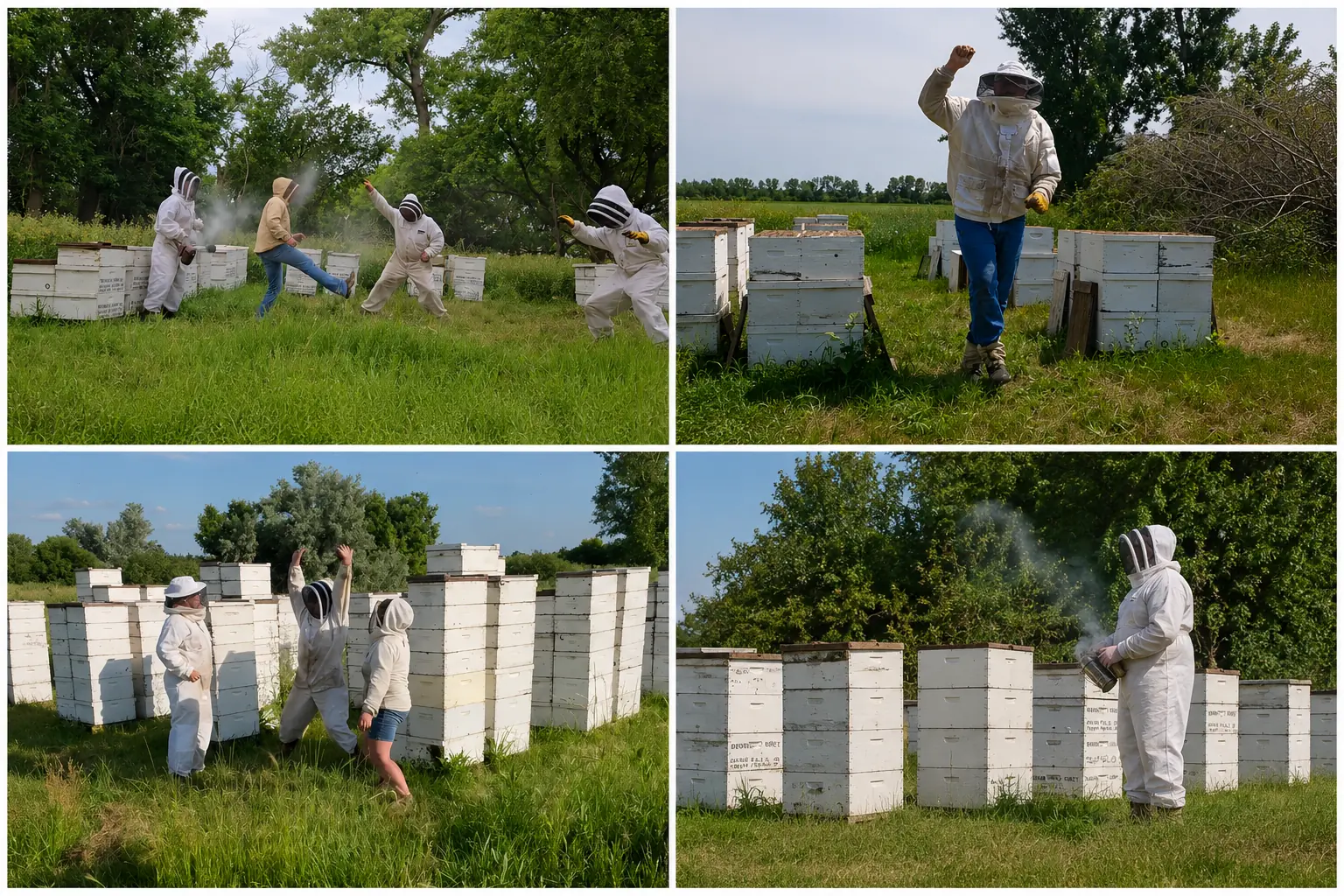
At Browning’s Honey, we’re constantly amazed by the intelligence and teamwork displayed inside every hive. Recently, our social media team shared a funny Instagram reel suggesting that if honey bees communicate by dancing, then beekeepers should too. We couldn’t resist accepting the challenge—and our team absolutely delivered! While our version is definitely more entertaining than scientifically accurate, it reminded us just how incredible the real waggle dance truly is.
Today, we’re taking you inside the hive to learn about this amazing behavior—and don’t miss the preview of our dancing beekeepers later in this article!
A healthy honey bee colony can contain anywhere from 20,000 to more than 60,000 bees during the busiest months of the year. With so many individuals working together, communication is essential.
Honey bees communicate through:
Without communication, the colony simply couldn’t gather enough nectar and pollen to thrive.
A single worker bee may visit 50 to 100 flowers during one foraging trip and make several trips each day during peak nectar flow.
For centuries, beekeepers knew that honey bees somehow shared information, but no one understood exactly how.
Everything changed when scientist Karl von Frisch discovered that honeybees weren’t simply moving randomly inside the hive—they were actually giving directions.
His groundbreaking research earned him the Nobel Prize in 1973 and forever changed the way scientists understood insect behavior.
Today, the waggle dance remains one of the most sophisticated communication systems ever discovered in the animal kingdom.
Imagine you’ve just discovered an enormous field of blooming clover overflowing with nectar.
You return home…
But instead of quietly unloading your nectar, you begin dancing.
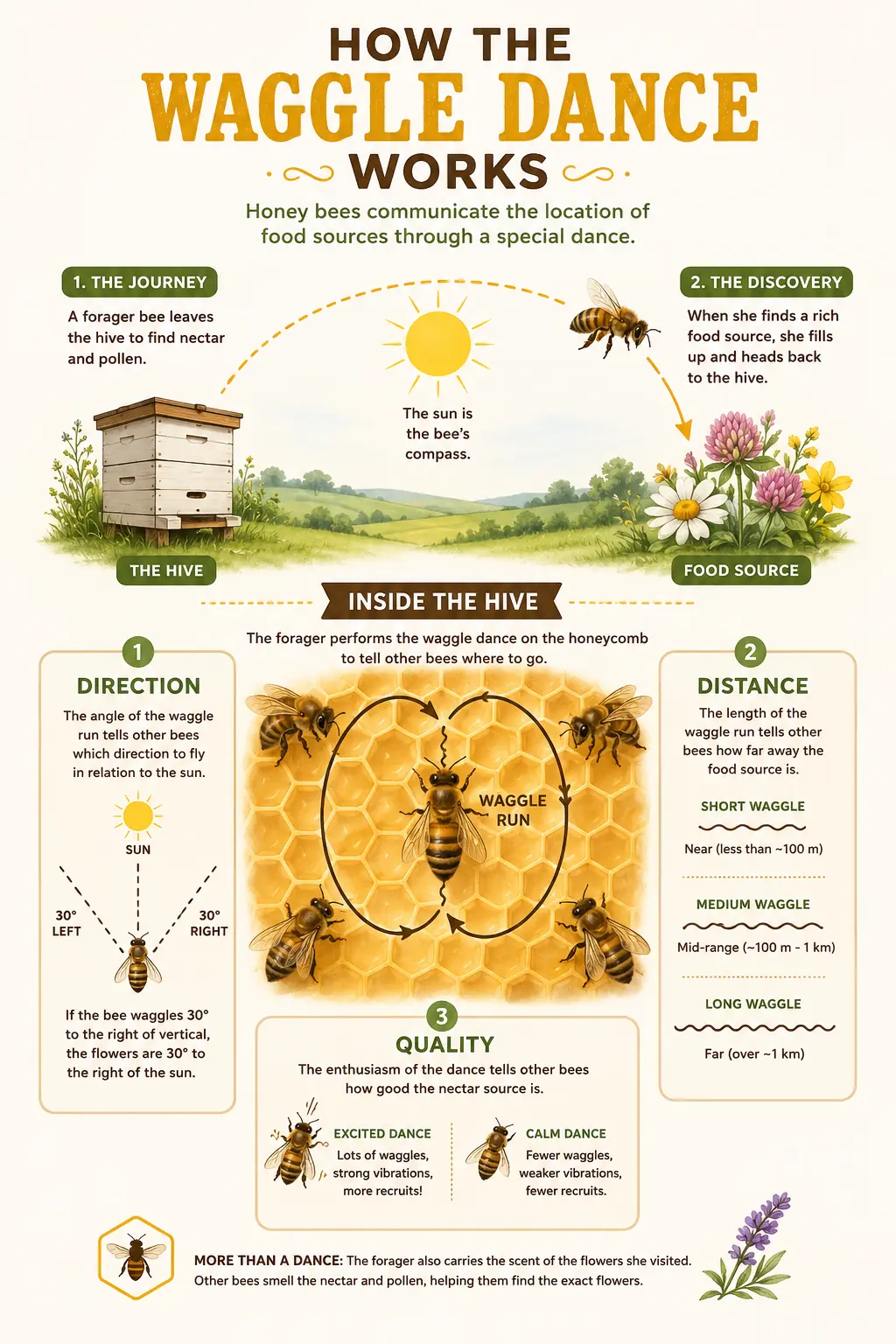
You trace a figure-eight across the honeycomb.
In the middle of the figure-eight, you rapidly waggle your body while vibrating your wings.
To us…
It looks like a tiny bee crawling in circles.
To the colony…
It’s a roadmap.
The angle of the waggle tells other bees which direction to fly in relation to the sun.
Even more amazing…
Honey bees adjust the dance throughout the day as the sun moves across the sky.
The longer the waggle run…
The farther away the flowers are.
Nearby flowers require only a short dance.
Fields several miles away require a much longer one.
Not every flower patch is worth visiting.
An excited bee dances longer and more enthusiastically when she finds an exceptional nectar source.
The better the flowers…
The bigger the audience she attracts.
Honey bees don’t simply memorize the dance.
They also smell the nectar and pollen carried by the dancing bee, helping them identify exactly what flowers to search for.
Every spoonful of honey begins with thousands of successful foraging trips.
The waggle dance allows the colony to focus its energy on the richest nectar sources available.
Instead of thousands of bees searching randomly…
Experienced foragers guide their sisters directly to the best blooms.
This remarkable teamwork not only produces honey—it also pollinates gardens, orchards, farms, and wildflowers that support ecosystems around the world.
When you pick up a jar of Browning’s Honey, it’s easy to see only the beautiful golden honey inside.
But every jar represents:
Each spoonful is the result of thousands of tiny decisions made by honey bees working together for the good of the colony.
That story is something we never take for granted.
Learning about the waggle dance gives you a whole new appreciation for what goes into every jar of honey.
Before it reaches your table, thousands of worker bees have flown countless miles, visited millions of blossoms, and shared their discoveries through one of nature’s most remarkable forms of communication.
At Browning’s Honey, we’re proud to continue a family beekeeping tradition that began in 1921. For five generations, our family has worked alongside honey bees to bring pure, natural honey from our hives to your home.
When you choose Browning’s Honey, you’re supporting American beekeeping, healthy pollinator populations, and a family committed to producing quality honey for more than a century.
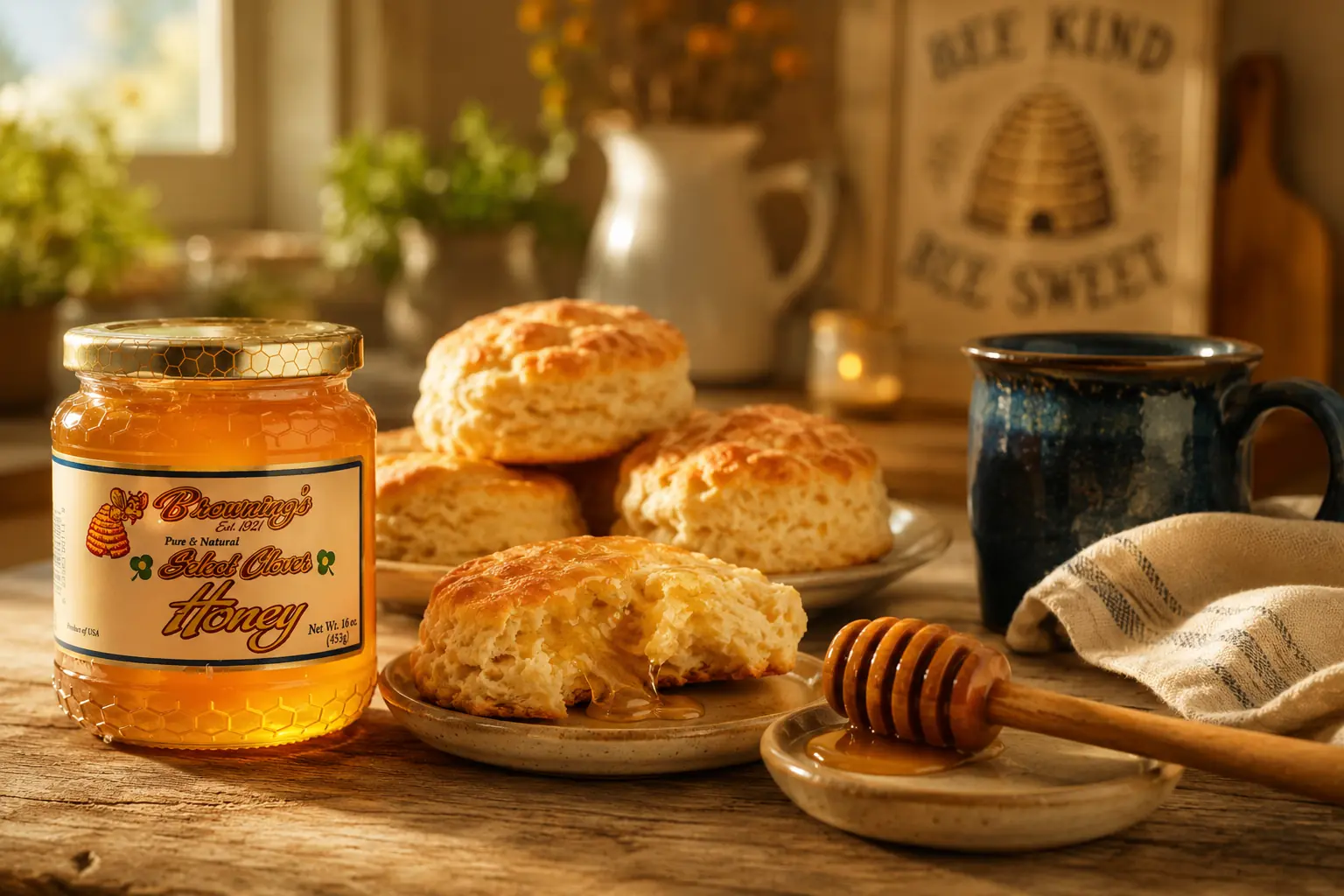
Whether you’re drizzling honey over warm biscuits, stirring it into your morning coffee or tea, baking one of the recipes from our website, or simply enjoying a spoonful straight from the jar, every taste is connected to the incredible work happening inside the hive.
Ready to bring the story home?
➡️ Explore Our Creamed Honey Collection
➡️ Visit Our Idaho Falls Stores
📍 9019 N 5th E
📍 1475 S. Holmes Ave
Now for the fun part!
🎥 Watch our Dancing Beekeepers Reel on Facebook and Instagram this month—we promise it’ll make you smile!
When our marketing team came across a social media trend about bees communicating through dance, we couldn’t resist putting our own Browning’s Honey twist on it.
We challenged our team to imagine what it would look like if beekeepers used the waggle dance around the bee yard.
Let’s just say…
Our team understood the assignment.
The result?
Lots of laughs, plenty of questionable dance moves, and a whole new appreciation for just how talented the bees really are!
At Browning’s Honey, we’ve spent generations working alongside honey bees, and they never stop teaching us something new.
The waggle dance reminds us that success comes from communication, cooperation, and working together toward a common goal.
The next time you drizzle honey into your tea, spread it on toast, or use it in one of your favorite recipes, remember that behind every drop is an incredible story—one told not with words, but with millions of tiny dances inside the hive.
And if you happen to see our beekeepers dancing around the bee yard…
Don’t worry.
They’re probably just trying to tell everyone where the best flowers are.
If you enjoyed learning about the waggle dance, we think you’ll love these resources too:
Try One of Our Favorite Honey Recipes
Read The History of the Beehive
Subscribe to The Buzz from Browning’s for weekly recipes, bee facts, special events, and exclusive offers delivered straight to your inbox.
Thank you for visiting Browning’s Honey. Whether you’re here to learn, cook, shop, or simply enjoy the fascinating world of honey bees, we’re grateful to be part of your journey.
September 24, 2026
August 20, 2026
July 23, 2026
July 10, 2026