
Back to School with Honey: Simple & Delicious Ways to Fuel Busy School Days
September 24, 2026

Browning's Honey
Buy Raw Honey Online

July 30, 2025
When you think about the roles of bees in a hive, you may imagine the queen bee reigning supreme and commanding her loyal workers like a monarch on a throne. However, that may not actually be the reality of the hive. The truth is more complex — and fascinating — than most people realize. Let’s take a closer look at the roles of queen, worker, and drone bees to discover who’s really in charge, and how a beehive operates.
The queen bee is the only fertile female in a healthy hive, and she is responsible for laying all the eggs, which is up to 2,000 per day during the peak season. She’s born from a fertilized egg, just like worker bees, but queen-destined larvae receive a specialized diet of royal jelly that supports their development into reproductive queens.
A future queen develops when worker bees select a young female larva to be raised in a specialized queen cell and provide her with the diet needed for queen development.
But rather than a queen, she is more of the mother of the hive, spending her days:
Despite her title, the queen doesn’t “rule” the hive in the traditional sense. She never gives out orders or makes strategic decisions.
Worker bees are all female and make up the vast majority of the colony. These multitaskers go through different roles throughout their lives, starting as nurse bees and eventually becoming foragers.
Except for reproduction, worker bees handle everything, including:
Additionally, since the queen bee is so busy laying eggs, she has worker bee attendants who follow her around all day, feeding and cleaning her.
Worker bees are responsible for nearly every step of honey production, from gathering nectar to processing, drying, storing, and capping it inside the hive. Learn more about their incredible work in How Do Bees Make Honey.
Worker bees also decide when it’s time to replace the queen — either due to age, health, or pheromone decline. In those cases, they’ll raise a new queen by feeding selected larvae royal jelly. Thus, worker bees not only run the hive, but they also control its leadership.
Worker bees even share information about productive food sources with their sisters. Through a remarkable behavior known as the waggle dance, foragers can communicate the direction, distance, and quality of nectar-rich flowers to other bees in the colony.
While queen and worker bees are both female, drone bees are the male members of the colony — and they live a very different life. There are approximately 100 female worker bees for every drone.
What Do Drones Do?
Drone bees are incapable of feeding themselves or foraging for food. They also don’t have a stinger.
So, Why Keep Drones at All?
Even though drones don’t help with hive maintenance, their genetic diversity plays an essential role in the health of bee populations. A successful mating event ensures the next queen will produce robust and diverse offspring.
Understanding the dynamics of the hive helps people appreciate the complexity of nature — and the importance of each bee’s role. It also offers insights into teamwork, leadership, and even community resilience. It also gives you a newfound appreciation for the hard role of worker bees.
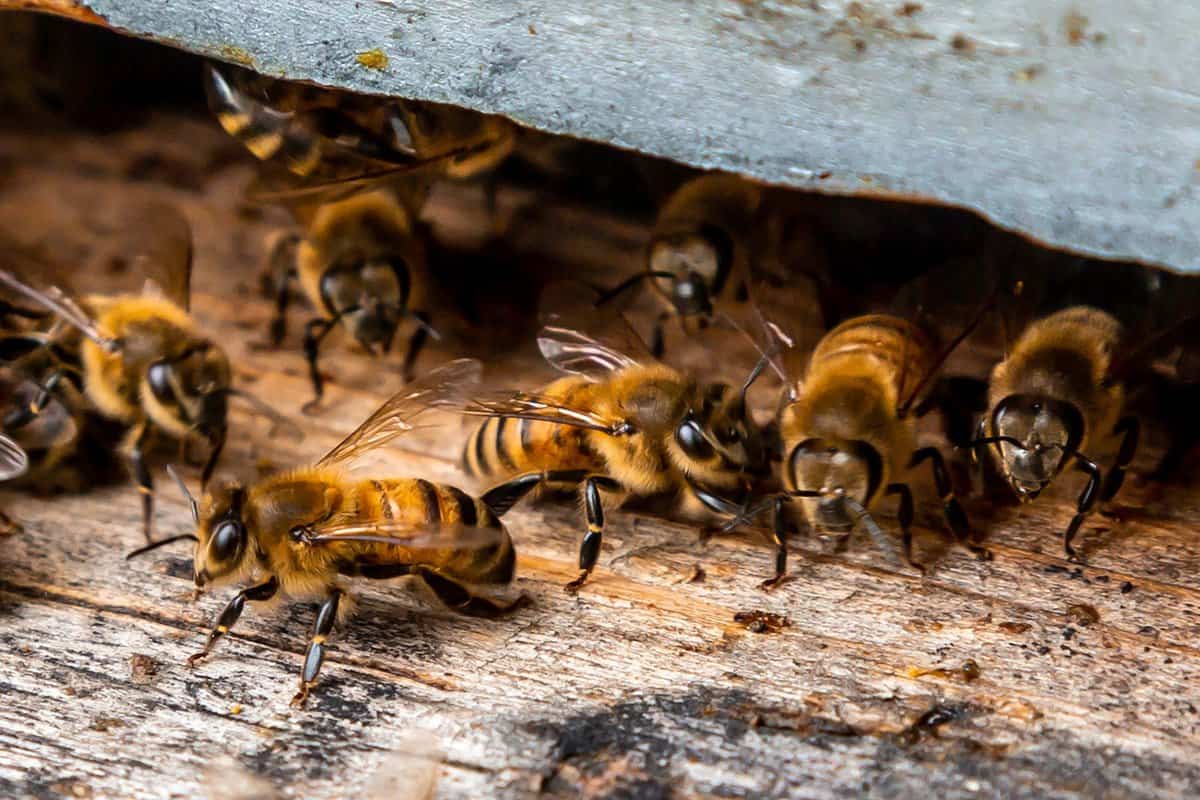
Here are some details to help you identify the different types of bees:
Worker Bee — This bee has a smaller body and is often seen around flowers.
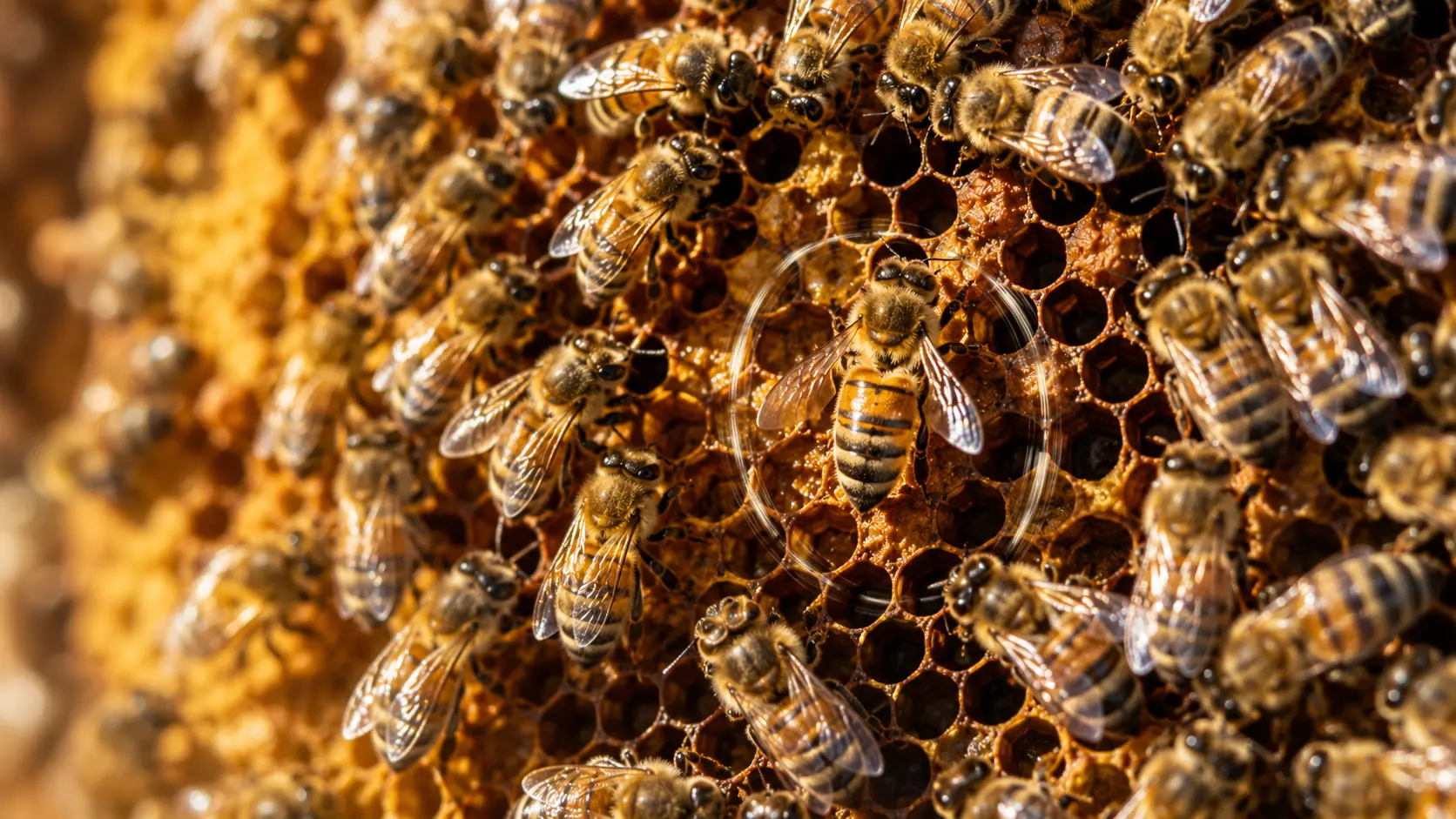
Queen Bee — The queen is caramel-colored with a longer body. You may not ever see her, though, as she rarely leaves the hive.
Drone Bee — Drone bees have large eyes, a wide body, and a round butt.
While the queen is vital to the hive’s survival, she’s more a biological necessity than a ruler. The worker bees make most of the colony’s collective decisions, including when it’s time to swarm and establish a new colony, a natural behavior that plays an important role in honeybee reproduction and colony growth.
Their collective intelligence and communication allow the colony to adapt, survive, and thrive. That remarkable teamwork is also behind every jar of raw honey and every piece of honeycomb. From caring for the queen and raising young bees to locating flowers, gathering nectar, and building comb, thousands of worker bees contribute to the health and success of the colony.

September 24, 2026
August 20, 2026
July 23, 2026
July 16, 2026